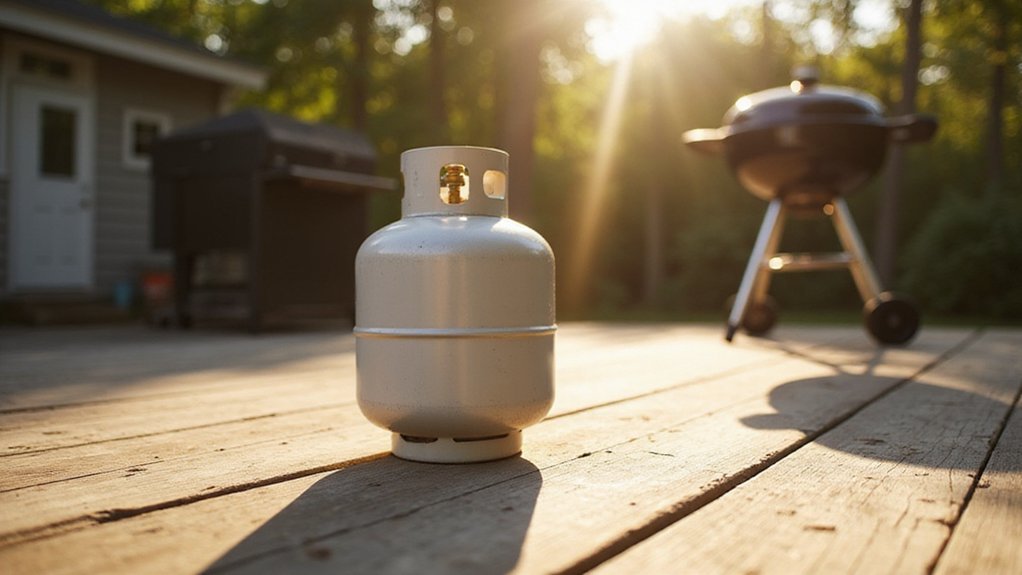
Worried about whether your backyard propane tank could somehow explode? While it’s a common concern, the truth is that propane tanks are designed with safety in mind and explosions are very rare.
Most risks come from gas leaks rather than the tank itself. With a few simple safety steps, you can keep your outdoor space safe and secure. The details below will help you understand how to do just that.
How a Propane Tank Can Explode and Why It’s Rare
Propane tank explosions are rare because safety features are built in to prevent them. The tank holds liquid propane under high pressure, which can cause an explosion if the containment fails. Such failure usually results from overpressurization, which may happen if external heat, like from a fire, causes pressure to rise faster than the safety relief valve can release it. Just as heat application requires understanding for safety in various contexts, research into targeted heat therapy shows controlled environments are key to managing thermal energy. This increased pressure can weaken the tank material, especially if it’s exposed to direct flames or severe impact. Just as choosing the right supporting base is crucial for pool safety and longevity, ensuring a stable and appropriate foundation for your propane equipment is key. However, strict safety regulations require features like pressure relief valves and robust tank materials, making catastrophic explosions extremely unlikely during normal backyard use unless an extreme external factor occurs. Understanding propane fire pit safety begins with proper installation and materials.
The Most Common Causes of Propane Tank Explosions
The primary cause of propane tank explosions is a leak that allows gas to accumulate. Such leaks can occur due to tank corrosion, physical damage, or faulty connections. When a leak happens in an enclosed space like a shed, the propane-air mixture can become highly explosive. A spark from a switch or other small ignition source can then ignite the gas, leading to an explosion. Although less common, direct exposure of the tank to fire can also cause a rupture or explosion, especially if the tank is already compromised. If you suspect a significant leak, your immediate response should be to evacuate the area and call for professional help—never attempt to handle or fix the leak yourself.
How to Safely Store and Transport Your Propane Tank
To store and transport your propane tank safely, always keep the tank upright on a stable, level surface outdoors. This position helps prevent leaks and tipping, reducing the risk of damage or accidents. Ensure the tank is away from buildings, open flames, or any sources of ignition because gas can accumulate if leaks occur indoors or in enclosed spaces.
Secure the tank firmly to prevent movement during transport. Use straps or a secure bracket to keep it upright, and always keep the valve protected with its cap. When transporting, never lay the tank on its side or back, as this can cause leaks or damage. Always transport the tank in your vehicle with the valve facing upward and the cap securely in place. For long-term value and controlled use, consider pairing your tank with a well-built DIY fire pit kit that often includes safe installation guidelines.
Routine inspection is essential before moving the tank. Check for rust, dents, corrosion, or any signs of damage, just as you would inspect the vinyl pool liner in a swimming pool for wear. Do not transport a damaged tank; damaged tanks pose significant safety risks. Never leave a propane tank in a hot vehicle trunk or other enclosed space. Excess heat can increase pressure inside the tank, leading to potential rupture or leaks. For example, understanding propane heater efficiency can also help you manage your overall fuel usage and safety. Following these guidelines ensures you handle your propane tank safely during storage and transportation.
Safe Practices for Your Propane Grill
To ensure safe and enjoyable grilling, follow proper setup and operation procedures. Always set up your grill outdoors on a level surface, maintaining a minimum distance of ten feet from your house and any other combustibles. Keep children, pets, and outdoor games well away from the hot unit to prevent accidents. Before lighting, perform pre-use checks by inspecting the hose for damage and applying a soapy water solution to all connections to test for leaks—bubbles indicate a leak that must be fixed. Always open the grill lid before turning on the propane tank valve to prevent flare-ups. Never leave the grill unattended while in use, and keep a Class B fire extinguisher nearby for emergencies. For added safety, establish a three-foot safety zone around the propane tank itself to protect children and pets. Regular cleaning is essential to remove grease buildup that could cause dangerous flare-ups. After cooking, shut off the propane tank first, then the grill controls, to prevent gas leaks.
What to Do If You Smell Gas or Suspect a Leak
If you smell gas or suspect a leak, take immediate action to ensure safety. First, extinguish any flames and avoid operating electrical switches, phones, or devices that could create sparks. Evacuate everyone from the area right away, moving to a safe, well-ventilated location far from the source of the leak. Do not attempt to find the leak yourself, as this can be dangerous.
If it is safe and accessible, turn off the main valve of the propane tank by rotating it clockwise to stop the gas flow. From a safe distance, call your propane retailer’s emergency number or dial 911. Clearly provide your address and detailed information about the situation. Do not return to the area until a qualified technician has declared it safe. Professionals use proper leak detection methods and follow all regulations before repairing the tank and restoring service.