If you’re wondering how a pool vacuum actually gets your pool so clean, you’re not alone. The process involves your pool’s main pump and filter working together to lift debris from the floor and walls.
By understanding how this system works, you’ll have a better grasp of how to keep your pool sparkling.
Keep reading to learn the ins and outs of pool vacuum operation.
How Your Pool Vacuum Creates Suction
Your pool vacuum creates suction by utilizing your pool’s filtration system to generate a water flow. When you connect the vacuum hose to the skimmer’s suction inlet, the pump’s pressure difference pulls water from the pool through the hose. This creates a negative water pressure at the vacuum head, which is what draws debris off the pool’s floor and into the filter. To set this up correctly, you need to prime the hose by submerging it to remove all air. Bubbles rising from the head indicate that the suction is working properly. Once the hose is full of water and air is expelled, a continuous suction path forms. It’s critical to choose the right type of vacuum head for your pool’s surface to ensure effective cleaning. This steady flow pulls dirt, leaves, and other debris into the filtration system, making cleaning efficient. For heavy debris or algae, you should set the filter to waste to bypass the main filtration system and expel the dirty water directly out of the pool. Proper maintenance, including regular brushing and water balancing, can protect your vinyl pool liner from abrasive damage and extend its service life. You can test that your water chemistry is balanced for this maintenance by using hot tub test strips designed for pools.
Parts of a Manual Pool Vacuum System
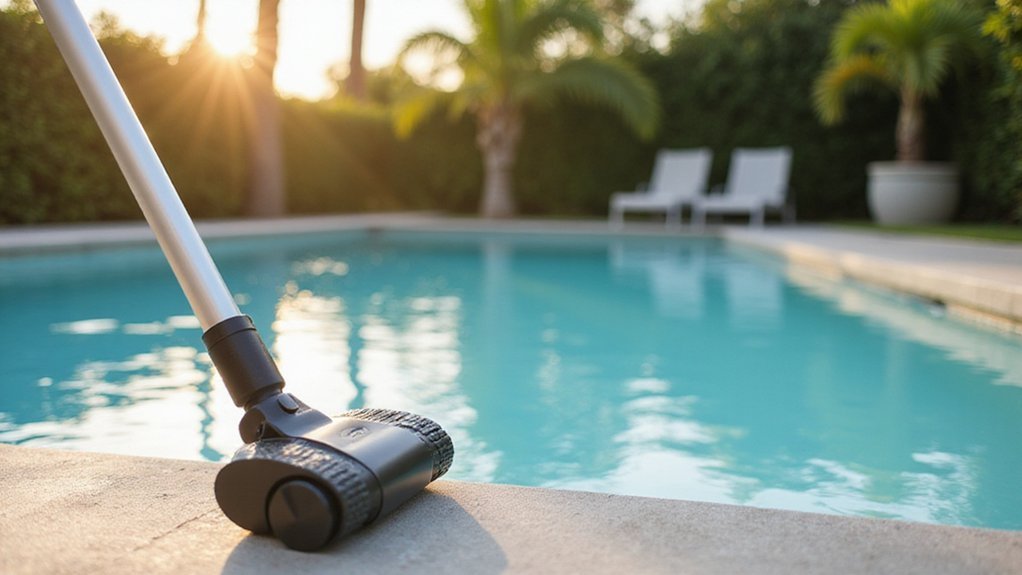
You also need a vacuum plate to block the skimmer basket opening. This ensures full suction is directed to the vacuum rather than the skimmer, making cleaning more efficient. When choosing a vacuum head, it’s important to select one suited for your specific pool surface, much like you would when selecting the right above ground pool cover for winter. The whole setup relies on your pool pump to generate the pressure difference that pulls water and dirt in through the hose. The debris is then captured by your pool filter, preventing it from recirculating into the pool water. Proper assembly and secure connections are key to effective vacuuming and maintaining a clean pool surface. After cleaning your pool, you can unwind in a private wellness retreat using an outdoor infrared sauna for deep relaxation. Completing your pool maintenance with a thorough cleaning allows you to relax and enjoy the benefits of solo heat therapy in your own backyard sanctuary.
How to Manually Vacuum Your Pool: Step-by-Step Technique
After assembling your manual pool vacuum system correctly, you can begin cleaning your pool effectively. Ensure the pump is turned on and all safety precautions are followed before starting. Begin vacuuming at the shallow end of the pool, using long, slow, overlapping strokes directed toward the deep end. Keep the vacuum head flat against the pool floor and move steadily to prevent debris from being stirred back into the water. Prime the hose thoroughly before beginning to ensure the pump does not lose its prime during the cleaning process. Make sure to vacuum the walls and steps for a thorough clean. For best results, choose the appropriate vacuum head type for your pool’s surface material, considering whether you have a gunite pool or a liner pool. This methodical approach is crucial for consistent pool maintenance and helps you avoid purchasing a low-quality product that might break under regular use. If you notice a loss of suction, check the skimmer basket for clogs. Throughout the process, keep the pump running to ensure debris is continuously pulled through the system and captured by the filter.
From Hose to Filter: The Debris Pathway
Once you’ve primed the vacuum hose, you’ll connect it to direct suction and start moving debris through a hidden journey from the pool floor to the filter. Your pump generates hydraulic force to pull in dirt and leaves, transferring this material through the vacuum plate directly into the pump’s suction line. Water velocity then carries debris through the plumbing, preventing debris accumulation in the pipes. This flow pushes everything from the pump discharge toward the filter. Ensuring proper hose maintenance, such as maintaining a tight, air-free connection, is crucial for sustaining strong suction, and keeping your tools organized with a simple DIY pool reel can make the process easier. Properly managing equipment after use is important, just as you would safely dispose of a propane tank after it is empty. Finally, the dirty water enters the filter vessel, where particles are captured and removed. A clean through-the-wall skimmer installation is critical for maintaining this entire flow path. controlled movements prevent stirring debris into the water for effective vacuuming.
Robotic vs. Automatic Pool Vacuums: Key Differences
Robotic and automatic pool vacuums operate through fundamentally different mechanisms, making their functionality and maintenance distinct. A robotic pool vacuum is powered independently with low-voltage electricity, allowing it to navigate the pool with a high level of precision. Thanks to built-in processors and programmed logic, it moves efficiently across floors and walls, scrubbing and vacuuming debris as it goes. This self-contained operation means it doesn’t rely on your pool’s existing systems and can often clean more thoroughly, with some models filtering debris as fine as 3 microns. For peak robotic vacuum performance, a clean cartridge filter is essential to maintain proper water flow and debris capture. The heat from its internal motor is efficiently dissipated through its design, similar to how infrared technology efficiently delivers heat in a sauna.
In contrast, an automatic pool cleaner depends entirely on your pool’s hydraulic system, utilizing suction or pressure to move around. Its movement tends to be more random because it lacks the sophisticated navigation technology of robotic models. This reliance on your pool’s plumbing system also influences your regular maintenance routines. Automatic models typically require you to check their smaller filter bags more often because they filter debris through your main pool filter. For instance, you should confirm the pool’s filtration system is clear before starting the cleaner, just as you would check it when preparing to shock a saltwater pool. While robotic vacuums are equipped with their own filtration and brushing systems, automatic cleaners simply channel debris back through the existing pool filter, which may lead to less efficient cleaning in certain situations.
Why Regular Vacuuming Is Crucial for Pool Health
Regular vacuuming is essential for maintaining a healthy pool. It removes organic debris that algae and bacteria feed on, directly supporting pool safety by reducing harmful microorganisms. Consistent vacuuming also protects your filtration system from clogs and strain, which extends its lifespan and helps keep the water clear. Additionally, regular vacuuming contributes to stable pool chemistry by lowering the chlorine demand caused by decomposing matter. Monitoring your pool chemistry with test strips is an easy way to confirm your vacuuming routine is effective. This prevents chemical imbalances that can lead to algae blooms. Establishing a weekly vacuuming schedule, or more frequent cleaning with heavy use, is a fundamental aspect of proper pool maintenance that ensures a healthier and more inviting swimming environment while avoiding long-term surface damage. Just as you would budget for maintaining any major equipment, consider the cost of propane tank refills for pool heaters when planning your overall maintenance expenses. Keeping a solar pool cover on when the pool is not in use can significantly reduce the amount of debris that enters the water, making your vacuuming tasks easier and less frequent.