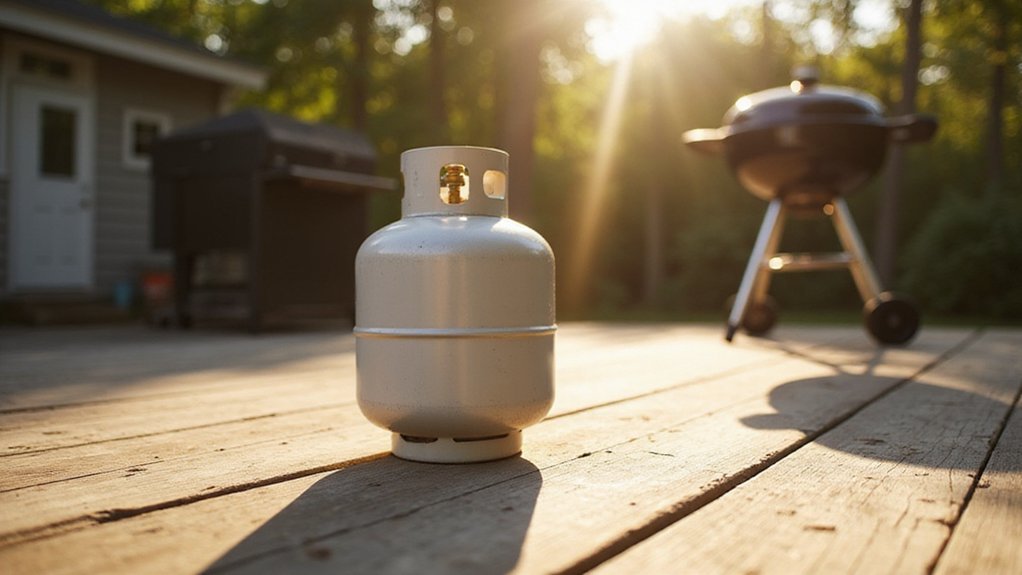
Worried about how to keep your propane tank safe? Proper storage is key to avoiding accidents and ensuring safety at home. Keeping it outdoors, on a stable surface, and away from heat sources makes a big difference.
Below are the essential tips to help you store your propane tank securely and responsibly.
Why You Should Never Ignore Propane Storage Rules
Ignoring propane storage rules can lead to dangerous and potentially deadly consequences. Propane is highly flammable and heavier than air, so leaks tend to settle near the floor. Without proper ventilation, these vapors can accumulate in confined spaces such as garages, creating an ignition risk from common sources like pilot lights or electrical sparks. This not only increases the chance of a fire but can also produce explosive vapor-air mixtures capable of igniting from a distance. small spills can produce enough vapor to ignite, highlighting how even minor leaks are a serious threat. Understanding propane tank safety can help you prevent these hazards. This makes learning the proper disposal steps crucial for when a tank is no longer in use.
Placing a propane tank near a heat source is equally hazardous. Heat causes the internal pressure of the tank to rise, which can activate the safety valve and release flammable gas. This principle of targeted heat application is a key difference in how infrared saunas operate safely and effectively, but it is precisely what makes storing propane near any heat source so dangerous. Overheating tanks can also weaken the tank structure, making rupture or leaks more likely. Proper placement and adherence to storage rules are essential to prevent these risks. Always ensure your propane tank is stored in a well-ventilated area away from heat sources and never in enclosed or poorly ventilated spaces.
The Golden Rule: Always Store Your Propane Tank Upright
Storing your propane tank upright is essential for safety and proper function. Always keep the tank in a vertical position to ensure the relief valve stays in the vapor space. When stored on its side, liquid propane can flow into the valve and release uncontrollably, posing serious hazards. This is similar to how a well-maintained pool liner surface also requires following specific rules to maintain its integrity and longevity. Upright storage keeps internal components like the dip tube aligned as designed, reducing the risk of leaks or damage. It also minimizes stress on the valve stem and fittings, lowering the chance of mechanical failure. Following this simple but crucial rule helps maintain the integrity of the tank’s safety features and prevents accidents caused by improper storage, and is a mandatory OSHA regulation. Understanding the basic propane system components, like the regulator and burner, underscores why correct tank orientation matters. Always ensure you have the proper safety tools on hand before handling propane equipment.
The Best Outdoor Locations for Propane Tank Storage
The best outdoor locations for propane tank storage are open, well-ventilated areas that minimize fire hazards. An open patio or deck on a non-combustible surface like concrete is ideal, with the tank placed at least 10 feet away from structures to ensure proper ventilation and reduce fire risk. A shaded spot alongside your house can work, provided it is clear of ignition sources such as heaters, grills, or electrical equipment. Keeping the tank out of direct sunlight is important to prevent pressure buildup from heat. You can also position the tank on a flat, stable yard area on a gravel or concrete pad, keeping it well away from woodpiles or mulch that could ignite. For added convenience, consider building a simple storage rack to keep the tank securely upright and organized. Similar to maintaining a hot tub, storing a propane tank requires attention to proper chemical safety for the surrounding environment. A detached, ventilated shed may be suitable if it allows free airflow around the tank, but it is crucial to avoid enclosed spaces that trap gas. Detached structures provide a safe option as they prevent gas from entering living areas. Selecting the right cover for your storage area, much like choosing the best pool cover, can further protect your tank from the elements. Lastly, a designated storage cage offers secure, upright positioning while ensuring adequate airflow around the tank, which is essential for safe storage.
Managing Sunlight and Temperature for Safe Storage
Managing sunlight and temperature is crucial for keeping your propane tank safe. Storage temperature should always stay between -40°F and 120°F. Excessive heat from direct sunlight can cause a tank’s internal pressure to spike, increasing the risk of valve leaks or ruptures. To prevent this, use solar shading techniques such as placing the tank under an awning, on the shaded side of a building, or covering it with a ventilated shade. Always ensure there is adequate airflow around the tank—do not enclose it completely—so heat can dissipate effectively. Store tanks outdoors in a well-ventilated, shaded area with a flat surface. In extreme weather conditions, passively shade the tank or reposition it seasonally to maintain a safe temperature range. These measures are vital for preventing dangerous overheating and ensuring your propane tank remains stable and secure.
How Far Away From Your House Should the Tank Be?
The required distance between your propane tank and your house depends on the tank’s size. For tanks under 125 gallons, you can usually place them adjacent to your home, but they must be at least 10 feet away from windows and air intakes. Tanks in the 125 to 500-gallon range generally need a minimum clearance of 10 feet from your house. Larger above-ground tanks, such as those holding 1,000 to 2,000 gallons, typically require at least 25 feet of clearance. Always check with your local authorities and propane supplier before installation, as local codes may have specific requirements that supersede standard NFPA guidelines.
Places You Should Never Store a Propane Tank
You should never store a propane tank inside your home or any occupied living space. The risks are severe because leaks allow heavier-than-air propane to accumulate, increasing the chance of a dangerous explosion. Avoid attaching tanks to garages or sheds, as these areas share ventilation with your home and can let gas migrate inside. Never place propane in a basement, crawlspace, or underground area where gas can pool unnoticed. Do not keep tanks in closed vehicles, trunks, or enclosed trailers, since heat and inadequate ventilation can quickly escalate danger. Additionally, keep propane tanks away from extreme heat, direct sunlight, or ignition sources like water heaters and grills, to prevent potential hazards. Always store your propane tank upright in a well-ventilated outdoor area, similar to the way you must ensure proper water circulation when shocking a pool.
How to Prepare a Safe Surface and Secure Your Tank
To prepare a safe surface and secure your tank, start by selecting a stable, non-combustible area that can support the weight and prevent movement. Place the tank on a solid, level base such as concrete, pavers, or compacted gravel—this prevents sinking or tipping. Clear the surrounding zone of all flammable debris, including leaves, twigs, and tall vegetation, to reduce fire risk and improve safety. Keep the area accessible and free from stored materials that could obstruct maintenance or emergency access. Finally, anchor the tank properly with manufacturer-recommended straps or a stand to prevent tipping or rolling, and regularly inspect these fastenings to ensure ongoing security. When selecting an anchor, ensure it’s rated for the significant weight of a full tank, which holds approximately 24 gallons of propane. Maintain a minimum clearance of 10 ft from structures to further mitigate risks. A well-prepared, clear base ensures safety and makes future access easier.
Do the Same Rules Apply to Small or Empty Cylinders?
Yes, the same safety rules apply to small or empty propane cylinders. Although storing up to two 1 lb cylinders indoors may be permitted in certain situations, you still need to follow core precautions: keep them upright, away from heat sources, and in well-ventilated areas. Never assume they are completely safe just because they are small or appear empty.
An empty cylinder that has held propane must be handled as if it is still full. It can retain pressurized vapor and residue, which pose hazards. Always store empty cylinders upright with the valve securely closed and the protective cap in place. The fundamental safety principles—such as proper storage, handling, and ventilation—do not change based on the size or apparent emptiness of the cylinder. Just as you would before shocking a green pool, you must prepare the environment by ensuring good ventilation and clearing any potential hazards.
Your Final Propane Tank Storage Safety Checklist
To ensure safe propane tank storage, follow these essential guidelines. First, make sure your propane container is located outdoors, upright, and placed on a stable, non-flammable surface. The tank should be positioned at least 10 feet away from any structures, including your home, shed, or garage. Proper securing is crucial; use straps or chains to prevent tipping or falling, especially in windy conditions.
Verify that the area is well-ventilated to prevent gas accumulation and avoid direct sunlight that can increase pressure inside the tank. Keep the storage space free of ignition sources like open flames, sparks, or smoking materials, and remove any combustible debris. Always check that the tank’s valves are fully closed and inspect the tank for rust, corrosion, or signs of damage that could compromise safety. Just as you would inspect and repair a vinyl pool liner, you should regularly check your propane tank’s surface for any wear or damage.
To maintain compliance, keep the storage area locked to restrict access, but ensure it remains accessible for emergency response or refilling purposes. Emergency equipment such as fire extinguishers should be nearby and ready for use. Regularly double-check all these points, as consistent adherence is your best safeguard against safety incidents involving propane tanks.