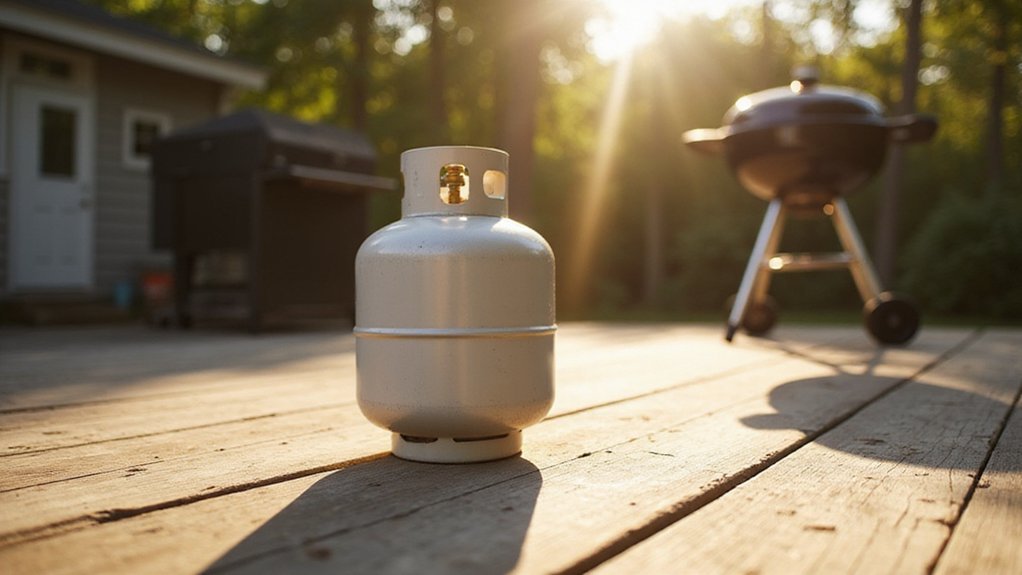
Wondering how much fuel you get from a typical 20-pound propane tank?
It turns out you can expect around 4.6 gallons of propane in a full tank.
Knowing this can help you plan your fuel needs more accurately and safely.
Keep reading to understand exactly how these figures come together and what factors might influence your tank’s capacity.
How Many Gallons Are in a 20 Lb Propane Tank?
A 20-pound propane tank contains about 4.6 gallons of liquid propane when fully filled. This figure is a useful benchmark because propane’s density and the tank’s internal volume determine how much fuel it holds. However, the actual usable gallons are less than this full capacity because of safety rules like the 80% fill limit, which accounts for thermal expansion and prevents overfilling. Manufacturers often cite slightly different figures, such as 4.7 gallons, due to variations in measurement methods or rounding. This capacity is a common choice for fueling outdoor grills and heaters. When exchanging tanks, you typically receive about 15 pounds of propane, which equates to roughly 3.5 gallons. Just as a vinyl pool liner has a typical lifespan, understanding your propane tank’s capacity helps with long-term planning. It’s also useful for planning activities like roasting marshmallows on your fire pit. For a DIY project, following a step-by-step plan can help you safely connect and use your tank. Proper tank maintenance—checking for safety valves and monitoring weight—helps you understand how much fuel remains and how much you can safely use.
How to Convert Propane Pounds to Gallons (The Simple Math)
Converting pounds of propane to gallons involves dividing the weight in pounds by the fuel’s density. Propane’s density is generally around 4.2 pounds per gallon, although it can vary slightly with temperature. For example, if you have 20 pounds of propane, dividing 20 by 4.2 gives approximately 4.76 gallons. Using a more precise value like 4.24 pounds per gallon yields about 4.72 gallons for the same weight. Always select a consistent density value from a reliable source to ensure accurate conversions. Remember, the chosen density directly impacts your calculation results, much like the precision of infrared research clarifies its therapeutic benefits.
The 80% Rule: Why Propane Tanks Aren’t Filled to the Top
Because a propane tank is never filled completely, it is typically filled to about 80% of its total capacity. This safety standard ensures there is a vapor space within the tank, allowing for safe expansion of the liquid propane as temperatures rise. Leaving this 20% buffer prevents pressure from building to dangerous levels, which could compromise the tank’s safety. Regulatory standards, such as NFPA 58, mandate this practice and are strictly enforced by reputable suppliers, much like the standards for proper pool chemical storage. Filling beyond the 80% mark can disable safety valves and increase the risk of tank rupture, making the 80% rule essential for safe operation during temperature fluctuations. This directly impacts how long a propane tank lasts in practical use, so accurate measurement is as important as in any DIY outdoor project.
What “Full” Really Means When You Buy or Exchange a Tank
“Full” can be misleading when you buy or exchange a propane tank. Industry standards define a 20-pound tank as full when it contains about 20 pounds of propane, which is roughly 4.8 gallons. During a custom refill at a service station, attendants typically use scales to ensure you receive this full amount. However, many exchange services follow older practices, underfilling cylinders to around 15 pounds, or about16244685 gallons, while still labeling them as “full.” This discrepancy means that whether your tank is truly full depends on how you refill it. Always confirm whether you’re getting a direct refill or an exchange, as “full” doesn’t necessarily mean you’re receiving the tank’s labeled capacity, similar to how choosing the right above ground pool cover depends on understanding specific features and claims, just as researching the best home steam sauna requires comparing models and specifications. National safety codes, like NFPA 58 standards, ensure tanks can safely be filled to this 20-pound capacity. The choice between refill and exchange can also significantly impact your overall fuel cost per hour for using a fire pit.
How to Safely Check How Many Gallons Are Left in Your Tank
To determine how many gallons are left in your 20 lb propane tank, start by weighing the tank on a scale. Subtract the tare weight—stamped on the collar—from this total weight to find the propane’s weight in pounds. For safety, never open the tank’s valve during this check to prevent leaks or accidents.
Next, convert the propane weight from pounds to gallons. Since propane weighs approximately 4.2 pounds per gallon, divide the propane weight by 4.2. For example, if your tank contains 15 pounds of propane, it’s roughly 3.6 gallons. Alternatively, you can perform a quick hot-water test: pour hot water down the side of the tank and feel for the cooler spot—the level of the propane will be indicated by the change in temperature. Always keep the tank upright during any measurement and keep it away from ignition sources to maintain safety.