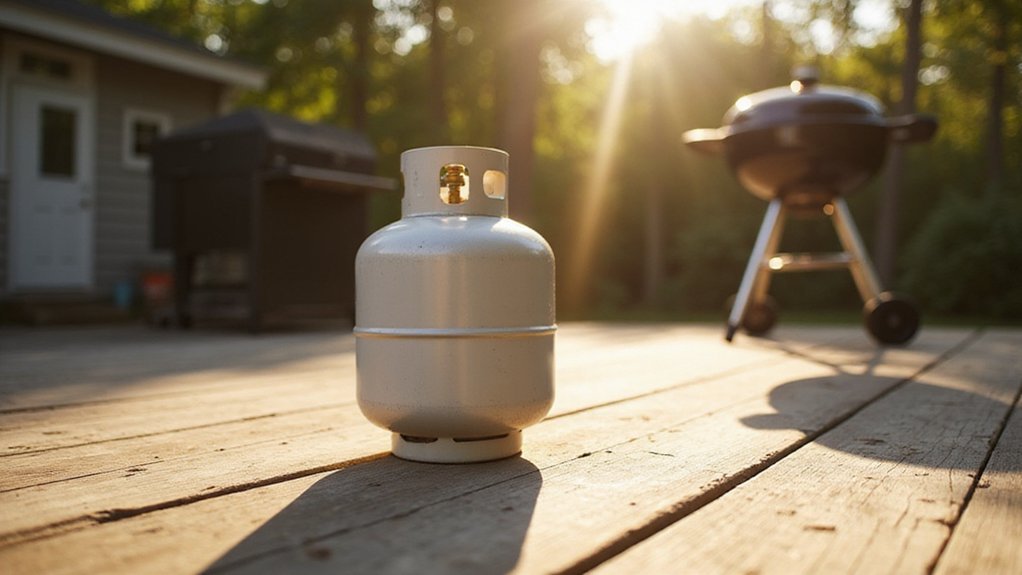
Ever wonder how long your propane tank will last before you need a replacement or recertification? The lifespan isn’t just about how long the fuel burns; it’s about the tank’s physical condition and safety certifications.
With proper care and regular checks, your tank can serve you safely for many years. Here’s what you need to know to keep yours in top shape.
Propane Tanks Don’t Have a Single Expiration Date
Propane tanks do not have a fixed expiration date; instead, they are maintained through a requalification system regulated by the U.S. Department of Transportation. The manufacturing date, stamped on the tank’s collar—for example, “06 14” indicating June 2014—marks the start of an initial 12-year service period. Although the tank’s design includes safety features like pressure relief valves that promote durability, compliance with requalification requirements is essential to ensure safety over time. This focus on sustained maintenance and safety protocols is similar to the regular use required to unlock the key benefits of other wellness systems. Once the initial 12 years pass, the tank does not automatically become unsafe. Instead, it must undergo an inspection and recertification process, which is indicated by a new stamp and sometimes a letter code. This process typically grants an additional 5 to 7 years of safe use, effectively resetting the timeline and allowing continued operation if the tank passes inspection. You can integrate your propane tank into a custom setup, such as a DIY propane fire pit, for your outdoor space.
The Key Difference: Tank Lifespan vs. Fuel Duration
The lifespan of a propane tank and the fuel duration it provides are two separate considerations. A tank can remain in service for decades if properly recertified and maintained, ensuring its physical integrity and safety over many years. This long-term safety is confirmed through tank certification, which verifies that the pressure vessel is still suitable for use.
Fuel duration, on the other hand, relates to how long the propane inside the tank will run your appliances. It depends entirely on your usage and the appliances’ combined BTU load. For example, a certified tank might last for 30 years, but the propane it contains could only power a heater for a few days or a grill for several hours per fill. Confusing these two aspects can lead to poor refill planning and inefficiency. It’s important to evaluate each factor separately to ensure safe operation and proper resource management.
Portable Propane Tank Lifespan and Recertification Rules
A standard steel portable propane tank has a lifespan of 12 years from its stamped manufacture date before it must undergo recertification. This regulation, enforced by the Department of Transportation (DOT), means you cannot legally refill the tank after this period without passing safety inspections at an authorized facility. Once recertified, the tank is typically valid for another five years, with the new expiration date stamped on the collar. Although a well-maintained tank can physically last longer, you must follow these recertification schedules. Tanks that fail inspection due to damage or corrosion should be taken out of service immediately to ensure safety. Just as the choice between a cartridge vs. sand filter impacts long-term maintenance, adhering to propane tank recertification schedules is essential, just as using the correct shock treatment is vital for clearing a green pool.
How Long Do Large Stationary Propane Tanks Last?
Large stationary propane tanks typically last 20 to 30 years, provided they receive proper maintenance. Their longevity depends on factors like installation quality, environmental conditions, and regular inspections. Properly cared-for tanks can sometimes extend beyond this range. For the most reliable results, follow the same careful process you would use for analyzing pool chemistry with test strips. Similar to gathering the right pool cleaning equipment before starting a job, ensure you have the correct tools and protective gear for tank maintenance. Regular professional inspections help identify corrosion, leaks, and valve issues early, preventing costly repairs or replacements. Applying protective coatings and ensuring the tank is installed on a level, stable pad also supports a longer service life. Environmental factors such as coastal air exposure or soil composition can influence durability, but diligent maintenance consistently helps your tank reach its maximum lifespan. Always follow recommended safety precautions and clear do’s and don’ts to ensure safe operation over the tank’s full service life.
How to Find and Read Your Tank’s Expiration Date
To find your propane tank’s expiration date, look for stamped markings on the metal collar around the valve. The key is a four-digit date code, usually formatted as “MM YY,” indicating the month and year of manufacture. For example, “06 14” corresponds to June 2014. The original service life is 12 years from this date, so a tank manufactured in June 2014 would need recertification or replacement by June 2026. The concept of timing for recovery is just as important for planning your propane tank maintenance as it is for planning your exercise routine. If your tank has been recertified, you’ll also see requalification symbols elsewhere on the collar. These might include an inspector’s star or a letter such as “E.” For instance, a mark like “E★26” shows the tank was requalified in 2026, extending its usable life for an additional five years from that date. The reduced upkeep required by propane tanks is a key factor when weighing performance and upkeep against wood-burning options. A successful requalification inspection for rust and integrity may involve installing a new valve. Always check the most recent date—whether from the original manufacture or the latest requalification—to determine your current expiration date.
What Happens When a Propane Tank Expires?
If your portable propane tank reaches its expiration date, you cannot legally get it refilled until it passes a recertification inspection. Under Department of Transportation (DOT) rules, retailers are prohibited from refilling an expired tank. Your main options are to have the tank recertified or exchange it for a new one. During recertification, a trained professional inspects the cylinder’s structural integrity and verifies that the tank’s pressure system is functioning properly. They also look for issues such as valve corrosion, which can compromise safety. If the tank passes inspection, it receives a new date stamp, usually valid for five years. If it fails, you need to replace the tank entirely. You can still use any remaining propane in an expired tank, but refilling it without the official recertification is not permitted. Understanding a propane fire pit’s basic operation highlights why maintaining a certified fuel source is crucial for safe and efficient performance.
Immediate Warning Signs Your Tank Needs Replacing
Immediate warning signs that your propane tank needs replacing include several visual and sensory indicators. Begin with a detailed visual inspection. Rust spots, pitting, or flaking paint—especially around the base, seams, and valve—signal serious corrosion and potential structural failure. Any dent larger than a quarter, or cracks, bulges, or other deformations, require immediate replacement. If you notice the smell of gas or hear a hissing sound, these are clear signs of a leak that must be addressed right away, and the tank should be safely disposed of following step-by-step instructions for depressurization. Always perform this disposal with the help of a certified propane professional for safety. Also, observe your appliances: yellow flames, sputtering, or frequent pilot outages can indicate pressure issues stemming from a compromised tank, which means the tank should be replaced promptly. Always practice safe chemical storage principles by keeping your propane tank in a cool, dry, and well-ventilated area away from other hazards.
Maintenance Tips to Extend Your Tank’s Service Life
Regular visual inspections and leak checks each month are essential for extending your propane tank’s service life. Look closely for signs of tank corrosion, dents, or damage to hoses and fittings. To check for leaks, apply warm soapy water to connections; bubbling indicates a leak that needs immediate attention. Valve maintenance is also crucial—always turn the valve off completely after use and store it with a cap when disconnected. Keep the tank filled to at least 20-30 percent capacity to reduce internal moisture buildup and prevent corrosion. Just as with a pool vacuum, proper equipment connections are vital for safety and efficiency. Clean the exterior regularly and ensure the base stays free of debris to avoid rust traps. For optimal safety and longevity, consider scheduling your annual professional inspection to coincide with other regular home maintenance, similar to how you might plan infrared sauna upkeep. Lastly, scheduling an annual professional inspection helps verify the tank’s integrity and proper pressure levels.
How Proper Storage Protects Your Tank for Years
Proper storage is essential for maintaining your propane tank’s long-term integrity. Storing it upright outdoors in a dry, shaded area helps prevent internal valve damage and keeps surface temperatures stable, which controls internal pressure. Elevate the tank on a stable, non-flammable surface like concrete to avoid contact with moisture that can cause base corrosion. Always secure a valve cap to protect the valve from dirt and debris, and keep the surrounding area clear of obstructions. Remember to check valves for leaks periodically using a soapy water solution to ensure safety. This careful approach shields the tank shell from rust, prevents dents from accidental tipping, and reduces stress caused by temperature fluctuations, much like choosing between a cartridge filter and a DE filter depends on understanding long-term maintenance needs. For example, when you refill your tank, choosing the right service provider can impact both cost and safety. Following a recommended duration for storage checks helps maintain optimal safety protocols. Collectively, these practices help ensure your propane tank remains safe and reliable for many years of use.