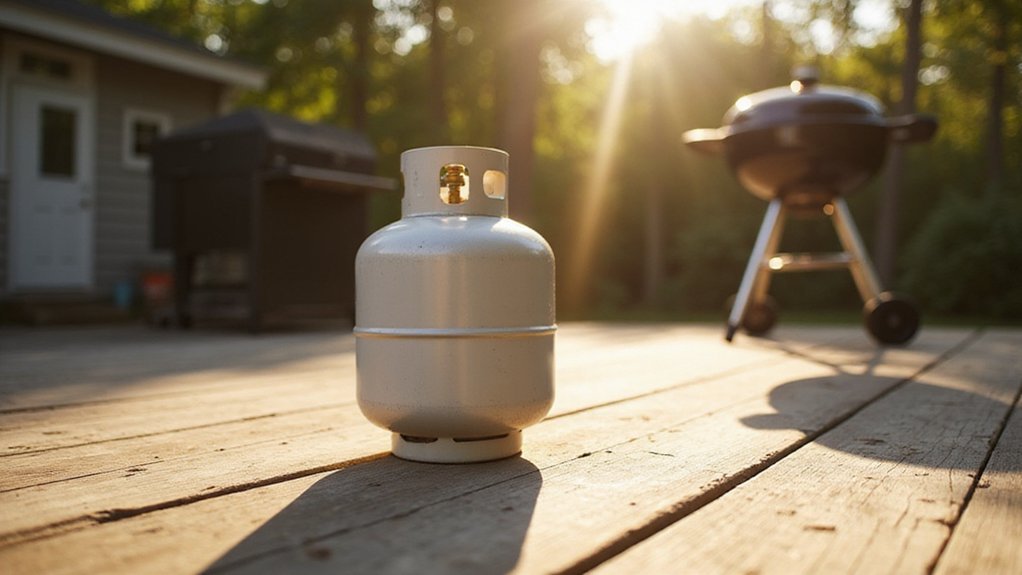
Refilling a standard 20-pound propane tank usually costs between $12 and $25, making it an affordable option compared to exchanging the tank.
You’ll pay around $3 to $4 per gallon, getting roughly 4 to 5 gallons of fuel.
Knowing the best time and place to refill can help you save even more.
Keep reading to learn everything you need to know about this routine expense.
The Real Cost of a 20 Lb Propane Tank Refill
Refilling a 20 lb propane tank typically costs between $14 and $20 nationwide, though prices can range from $12 to $25. This refill provides about125 gallons of propane, which averages roughly $3.00 to $4.00 per gallon. Your final cost depends on your location and retailer choice; for example, a warehouse club like Costco may charge $13 to $15, while U-Haul’s prices are often in the $14 to $19 range. For those who use saunas, this energy cost can be compared to the ongoing expense of operating an infrared sauna for home heating and wellness benefits. Understanding the factors that impact portable sauna costs, from materials to features, can help you make informed purchasing decisions for other home wellness equipment. Like fueling a grill, optimizing wellness routines also involves understanding when to use equipment, such as considering infrared sauna timing relative to your workouts. Keep in mind, this expense reflects your energy needs for grilling or heating. To ensure safety, always check that your tank is certified and within its inspection date before refilling. Doing so helps avoid extra fees and guarantees a safe, proper fill.
Propane Tank Exchange: Is It Worth the Price?
Swapping a propane tank at a retail kiosk costs between $15 and $25, which is a higher upfront price compared to refilling your own tank. Typically, an exchange provides only 15 pounds of propane instead of a full 20 pounds, raising the effective cost to roughly $5.00 to $6.00 per gallon. This price is about 35-50% more per pound than a refill, but it includes services like shell replacement and safety inspections. Similar to liner replacement costs, these service-inclusive options can push the overall price higher. This guarantee ensures your tank meets all storage safety and tank regulations, making it a worthwhile choice if you prioritize convenience and compliance over the lowest fuel cost. Research into home wellness environments demonstrates that convenience often outweighs pure cost savings for many users. Knowing the total cost is helpful when planning your DIY propane fire pit budget.
Comparing Propane Refill Prices at Major Retailers
Refill prices for a 20 lb propane tank vary significantly depending on where you go. Warehouse clubs like BJ’s and Costco often offer the lowest rates, typically between $12 and $15 for members. Large home-improvement stores such as Tractor Supply usually charge around $17 to $20. Grocery stores, gas stations, and pharmacies tend to price refills from $20 to $25, often including safety inspections or other bundled services. A standard 20 lb tank holds approximately 4.7 gallons of liquid propane when full. It’s important to ensure the refill location verifies your tank’s certification validity; they will check the date stamp. Always review basic fire pit safety tips before using your refilled tank. Independent specialists may offer competitive rates, but convenience stores and outlets with higher overheads generally have higher prices. Remember, the cost depends largely on the retailer’s business model and services offered. Selecting the right retailer is akin to choosing the best sauna door, where materials, design, and efficiency impact value.
Should You Refill Your Tank or Just Swap It?
Refilling your propane tank is usually the more economical choice, especially if your tank is in good condition and up to date. It costs less per gallon because you only pay for the fuel you use, with no additional fees. Refilling supplies more propane for the same price. This makes refilling an attractive option for frequent users who want to save money over time, much like understanding the total cost of ownership for an inflatable hot tub requires looking beyond the initial purchase price. However, refilling requires that your tank is safe, certified, and not expired. If your tank is damaged or has failed a safety inspection, a refill station will refuse to fill it. This is why finding a trusted propane refill station is crucial for safety and service.
In contrast, exchanging your tank provides a quick and easy solution when you need propane fast. When you swap, you get a fully certified, safety-inspected tank immediately, which is especially handy if your tank is out-of-date or damaged. While this convenience comes at a higher overall cost per gallon, it eliminates concerns about tank safety and certification. For occasional users or situations where time is limited, swapping often makes more sense than waiting to refill. This is true whether you’re heating a grill or heating your hot tub, as both require proper pressure and safe equipment. Ultimately, your choice depends on how often you use propane and your priority between savings and convenience.
How Propane Is Priced: By Gallon vs. By Tank
Understanding the savings from refilling over swapping requires knowing how propane is priced. At self-serve stations, you typically see a per-gallon rate, usually between $2.40 and $3.70. You pay only for the gallons needed to fill your tank, which can save you money if your tank isn’t completely empty. In contrast, an exchange chain often charges a flat fee for a “full” tank, but that tank is usually only about three-quarters full. This hides the true per-gallon cost, which can be $5.25 or higher. Both pricing methods vary with seasonal changes, affecting your overall cost. Refilling by the gallon tends to be more economical when your tank isn’t empty, while a flat fee simplifies the process but can cost more per gallon. For any DIY project, having a clear step-by-step plan can save you time and money, just as it does for building your own sauna. Just as with a new pool, the right site preparation is key to a safe and level foundation for your propane setup. For cost-effective maintenance of any system, regularly checking your chemical levels is a smart habit.
How Costs Change for Different Tank Sizes
Propane costs vary significantly by tank size, and your expenses depend on the amount you need. For a standard 20 lb grill tank, refilling typically costs between $15 and $25. Larger, stationary tanks, such as a 100 lb cylinder used for RVs, range from $60 to $110. A 100 lb tank holds approximately 24 gallons of propane, which is a useful conversion for comparing fuel costs across different tank types. Residential tanks are a more substantial investment: refilling a与被妢 gallon tank usually costs $200 to $300, while a 500-gallon tank for home heating can range from $750 to $1,000. Keep in mind that these prices reflect only the fuel. For the most efficient service, ensure all equipment, including the vacuum head, is clean and free of debris before your refueling appointment. Proper tank placement and handling is a key propane safety precaution that also helps prevent accidents and service delays. You will also need to factor in regular maintenance, safety inspections, and potential service fees, which can differ depending on the tank’s size and whether it’s a permanent installation.
How Region Affects Your Propane Refill Cost
Your regional location has a major impact on your propane refill costs. In colder northern states, winter demand causes prices to surge due to increased consumption for heating. Conversely, in the South, prices are often lower because milder winters reduce demand and proximity to Gulf Coast production facilities helps cut transportation costs. Your proximity to pipelines, storage terminals, and distribution centers also influences prices—being close to these infrastructure points typically lowers costs, while remote areas face higher transport fees. Additionally, local supplier competition affects prices; in rural areas with few dealers, you may pay more compared to suburban markets with multiple providers vying for your business. Before refilling, you should always perform a thorough outdoor rug inspection to check for any damage or safety hazards. Consider consulting expert advice on home wellness, as some sources suggest using a steam sauna can support recovery, though it’s important to follow specific safety guidelines.
7 Ways to Save Money on Propane Refills
Choosing to refill your propane tank rather than exchanging it can save you money because refills typically have lower fees. When you exchange a tank, additional charges often include handling fees and service charges, which increase the overall cost. Refills offered directly from suppliers generally provide a more transparent and competitive price per gallon. Comparing local prices at warehouse clubs and independent suppliers can help you find the best deal. Refill during off-peak seasons, like summer, when demand drops and prices tend to be lower. Additionally, joining loyalty programs or signing up for email alerts can unlock discounts or special promotions that further reduce your expenses. Maintaining your appliances and considering more efficient models can also decrease your propane consumption over time, saving you money in the long run. Investing in refillable propane bottles provides long-term savings with a refill cost as low as sixty-seven cents per pound after the initial purchase.