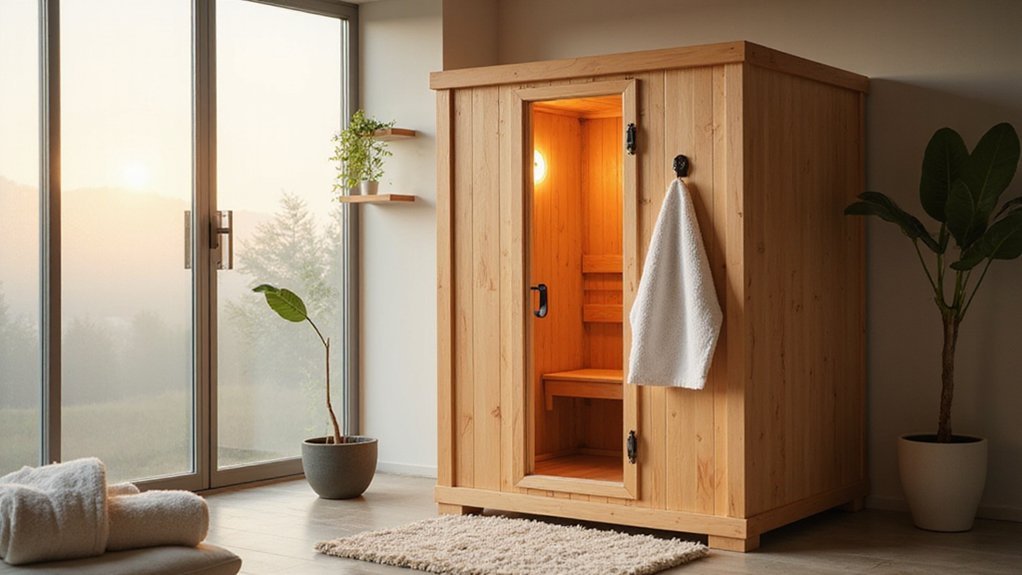
Figuring out whether an infrared sauna or a steam room suits your needs starts with understanding how each offers different heat experiences. Infrared saunas provide gentle, penetrating warmth at lower temperatures, making them great for muscle recovery and cardiovascular support.
Steam rooms deliver moist, high-humidity heat, perfect for respiratory relief and detoxification. The right choice depends on your priorities and lifestyle, and the following details will help you decide.
How Do Infrared and Steam Saunas Heat You Differently?
Infrared saunas heat your body by emitting radiant heat waves that penetrate directly into your skin and tissues. These waves, especially in the far-infrared spectrum, can reach about 1.5 inches beneath the surface, providing a deep, internal warmth at lower air temperatures typically between 110°F and 150°F. Because the heat is absorbed directly into your tissues, you experience intense heat without the need for extremely hot and humid air, and this deep heating method increases heart rate and cardiac output to produce a beneficial cardiovascular strain. This process can promote detoxification through sweating as the deep heat helps mobilize toxins from tissues. The DIY Propane Fire Pit Guide demonstrates how focusing radiant heat in a specific area creates efficient warmth. A successful setup requires having the right tools and materials from the start.
In contrast, steam saunas rely on convection to heat your body. They heat humid air to much higher temperatures, generally between 150°F and 195°F, creating a hot, moist environment. This humid air transfers heat from the outside of your body inward, warming your skin first and then penetrating deeper through body heat conduction. The key difference is tissue penetration: infrared heat directly stimulates your internal tissues, while steam heats you externally through your skin.
Health Benefits: Aligning Infrared or Steam With Your Goals
Choosing between an infrared or steam sauna depends on your specific health goals. Infrared saunas provide deep heat that supports cardiovascular health and may alleviate chronic pain more effectively, backed by clinical evidence. Steam saunas, rooted in cultural traditions, are often favored for respiratory comfort and muscle relaxation. If reducing stress, improving sleep, or boosting mental wellbeing are priorities, both types can help, although infrared saunas have shown particular benefits for conditions like fibromyalgia. Consider environmental factors as well: infrared units usually consume less energy and water compared to steam saunas. For muscle recovery after exercise, infrared therapy may accelerate healing more directly. Ultimately, weighing these benefits against your main objectives can guide you toward the most suitable sauna type for your wellness needs.
Which Sauna Is Safer and Easier for Daily Use?
Infrared saunas are generally safer and easier for daily use because they operate at lower temperatures, typically between 110 and 170°F. This milder heat reduces the risk of burns and overheating, making sessions more comfortable and manageable over time. The gentler environment allows you to enjoy longer sessions without feeling overwhelmed by intense heat. However, core health risks such as dehydration and low blood pressure are similar in both infrared and traditional saunas. To stay safe, monitor your body’s signals and limit session durations. Infrared saunas often put less stress on your body, making them a more practical choice for daily use, as long as you stay hydrated and follow cooling guidelines. You can manage the operating cost of an infrared sauna effectively due to its lower power requirements and faster heating time compared to other heaters.
Breaking Down Installation, Upkeep, and Cost
Installation, upkeep, and cost vary significantly between infrared saunas and steam rooms. Infrared saunas generally cost between $1,500 and $15,000 for pre‑built units, making them more budget-friendly upfront. Steam rooms, on the other hand, require complex plumbing and waterproofing, with installation starting around $3,000 but often exceeding $25,000 for custom setups. Operating costs also differ: infrared sessions typically use about $0.15 to $0.30 in electricity per session, while steam rooms can cost between $1.25 and $2.50 per use. When it comes to maintenance, infrared cabins are simple to care for—just wipe down the surfaces regularly. Traditional saunas often need wood resanding to keep them looking and functioning well. Steam rooms demand frequent and rigorous cleaning to prevent mildew buildup. Over a five-year period, infrared saunas tend to be the most cost-effective overall, with steam rooms usually costing the most to own.
Is an Infrared Sauna or Steam Room Right for Your Home?
Choosing between an infrared sauna and a steam room depends on your health goals and lifestyle. Infrared saunas offer dry, gentle heat that penetrates the skin deeply, making them ideal for daily use and muscle recovery. Their lower humidity levels mean you can comfortably enjoy sessions back-to-back without feeling damp or overheated. In contrast, steam rooms create a moist, immersive environment perfect for respiratory relief and relaxation. The high humidity can feel more intense and may require longer recovery between uses. Aesthetic preferences also influence your choice: infrared cabins feature warm, wooden finishes creating a cozy sanctuary, while steam rooms offer a misty, spa-like atmosphere. Just like any home wellness equipment, understanding the right tools and techniques ensures you get the most from your investment. Consider household needs too; families might favor infrared saunas for quick, moisture-free sessions, whereas steam rooms are better suited for occasional, shared experiences if proper ventilation is in place to manage humidity levels. Before finalizing your choice, ensure you understand the step-by-step instructions for proper installation and maintenance of your preferred unit. It’s important to compare the top options available to find the right fit for your specific needs.
7 Questions to Find Your Perfect Sauna Match
To find your ideal sauna match, ask yourself seven key questions. First, consider your primary health goals: do you want deep muscle relief or respiratory support? Your answer will help you choose between a sauna designed for relaxation or one that emphasizes detoxification and breathing benefits. Next, think about your thermal comfort preferences—do you favor gentle, dry heat, or do you prefer intense, humid steam? Your heat tolerance influences whether a traditional sauna or a steam room suits you better. Infrared models are more tolerable at lower temperatures, which can be a key advantage if you are a beginner or managing fatigue or anxiety.
Time availability is another critical factor—do you have 15-minute windows or longer sessions? Shorter sessions might call for quick-heating models, while longer ones may benefit from larger, built-in units. Space considerations are also important—do you need a simple plug-in unit or a fully plumbed-in room? This affects both installation complexity and cost.
Decide if you’ll use the sauna alone or socially, which impacts the size and features you’ll want. Budget constraints matter as well, so set a realistic range that guides your options. Finally, aesthetic appeal plays a role—does a sleek, modern cabin integrate best with your home decor, or do you prefer a traditional tiled room? Honest answers to these questions steer you toward the sauna that best fits your lifestyle and preferences.
Final Decision: Choosing Between Infrared and Steam
Choosing between infrared and steam saunas depends largely on your wellness goals and practical preferences. Infrared saunas typically operate at lower temperatures, around 120 to 150 degrees Fahrenheit, and rely on infrared light to heat the body directly. They are easier to install at home and require less space, making them a convenient choice if you prefer quick setup and minimal construction. Infrared units often come in portable models, which can be moved or stored easily if space is limited. This also makes estimating your long-term energy costs simpler, similar to understanding the capacity of a 20 lb propane tank.
Steam saunas, on the other hand, use a generator to produce high humidity and operate at higher temperatures—usually between 110 and118 degrees Fahrenheit with 100 percent humidity. They provide a traditional, spa-like experience with intense sweating and respiratory benefits, making them ideal if you seek detoxification or respiratory relief. However, steam rooms generally involve more permanent installation, larger space requirements, and higher upfront costs. To manage expenses, it’s wise to research fuel refill costs for any heating system you consider.
Practical considerations are essential. If privacy or aesthetic harmony with your home is a priority, portable infrared units can be discreet and less invasive, whereas steam rooms often necessitate a dedicated, built-in space. For a different type of radiant heat experience, some users may also consider the distinct benefits of a full spectrum sauna. Ultimately, aligning your choice with your health goals—whether it be muscle recovery, detoxification, or relaxation—will ensure your sauna experience supports your lifestyle effectively.