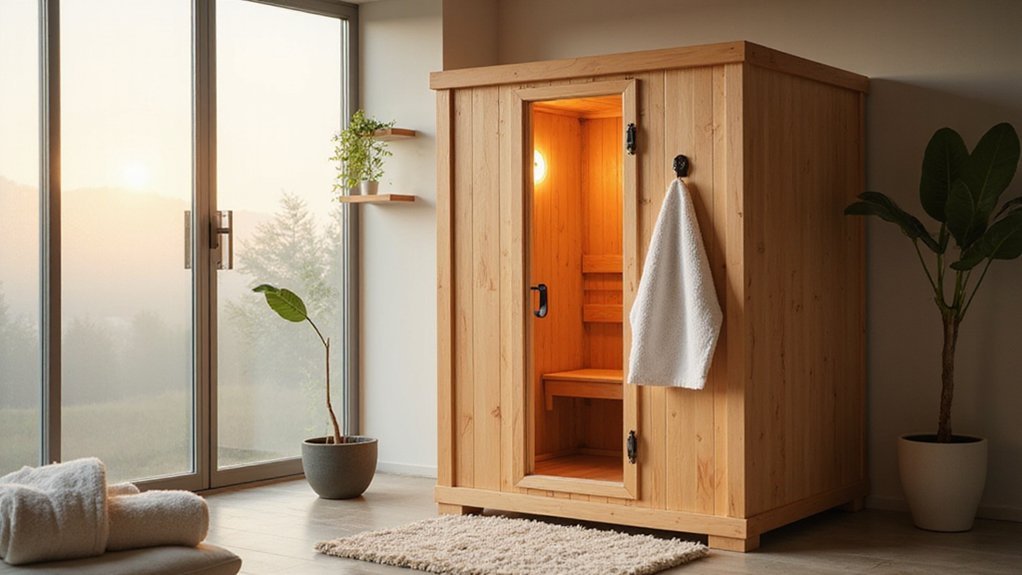
Wondering which sauna type suits you best—infrared or conventional? The choice often comes down to how you prefer to relax and your heat tolerance.
Infrared saunas provide gentle, deep-penetrating heat at lower temperatures, making them great for longer sessions and sensitive skin.
Conventional saunas deliver intense, steamy heat for a more traditional experience.
Keep reading to see how these options compare side by side.
Infrared vs. Traditional Sauna: The Core Difference That Guides Your Choice
The core difference lies in how each sauna generates heat. An infrared sauna emits panels that produce wavelengths directly warming your tissues. This results in a milder ambient temperature because infrared waves penetrate the skin and muscles, bypassing the air altogether. You’ll feel deeper heat with less overall heat in the environment.
In contrast, a traditional sauna heats the air with a stove, creating a hot, steamy atmosphere. When you pour water on the hot rocks, it produces steam, which raises the humidity and intensifies the heat. The body is warmed indirectly through this superheated, humid air, leading to a different sensory experience.
Ultimately, you’re choosing between a sauna that heats from the inside out with radiant energy and one that envelops you in a moist, steamy atmosphere. The effectiveness of either type depends on raising your internal core temperature to trigger benefits like heat shock proteins, which is achievable in both sauna styles despite their different operating temperatures. This core temperature rise is fundamental for unlocking the key infrared sauna benefits of detoxification and relaxation. The infrared approach offers a gentler, more targeted warmth, while the traditional style provides a more intense, enveloping heat that’s ideal for those seeking steam and higher temperatures.
Health Benefits Compared: Infrared and Traditional Saunas for Heart, Pain, and Longevity
Both infrared and traditional saunas offer significant health benefits for your heart, pain relief, and longevity, backed by research. Regular use of either type shows a strong dose-response effect on cardiovascular health. Using an infrared therapy protocol or visiting a Finnish sauna 4 to 7 times each week can reduce your risk of fatal heart events by 40 to 63 compared to just once a week. Both modalities improve endothelial function, which helps your blood vessels work properly, lower blood pressure, and reduce systemic inflammation.
Infrared therapy has additional benefits for heart failure patients, such as improving ejection fraction and exercise capacity. Consistent sauna use also promotes longevity by supporting your autonomic nervous system balance and decreasing oxidative stress. Whether you prefer infrared or traditional saunas, incorporating regular sessions can lead to notable improvements in heart health, pain management, and overall lifespan.
Detox and Recovery: Which Sauna Type Makes You Sweat More Effectively?
Infrared saunas can make you sweat more effectively at lower temperatures compared to traditional saunas. They use a different heating method that allows for deeper infrared penetration, directly heating your core tissues. This triggers a strong sweat response even at temperatures around 120–150°F, which is less intense than the air temperatures typical of traditional saunas. Some claim that the sweat produced in an infrared sauna contains a higher percentage of toxins, but evidence for significant whole-body detoxification remains limited. Your liver and kidneys are primarily responsible for detoxification, regardless of the sauna type. For recovery purposes, both infrared and traditional saunas boost circulation, but the gentler heat of infrared models may let you enjoy longer, more comfortable sessions, potentially supporting the recovery process more effectively. Infrared sauna therapy is even used in medical settings, such as the clinically proven waon therapy for heart failure in Japan. You can apply a step-by-step plan to many wellness projects just as you would when building a DIY propane fire pit.
Comfort and Safety: Which Sauna Best Fits Your Tolerance and Health?
If you are sensitive to intense heat or have certain health concerns, an infrared sauna is generally the safer and more comfortable option. Its operating temperature of 45–60°C offers a gentler thermal experience compared to traditional saunas, which reach 70–100°C with dry heat or humid steam. This lower temperature helps reduce respiratory discomfort and makes breathing easier during your session. The softer infrared warmth allows you to sit comfortably for longer periods, which can be beneficial if you need a more moderate approach. For any wellness routine, maintaining a consistent environment is key, much like the importance of accurate water testing for pool maintenance.
Infrared saunas are also better suited for individuals with cardiovascular issues like chronic heart failure when used under medical guidance. Their customizable temperature settings and milder heat make them more accessible for those with low heat tolerance, anxiety, or other health complexities. To ensure you’re getting the most out of your sessions, consider using 7-way test strips for routine wellness tracking. It’s important to always follow step-by-step instructions for any new equipment to ensure safe operation. Overall, if comfort and safety are your priorities, especially with health considerations in mind, an infrared sauna offers a lower-risk, more tolerable experience.
Cost Breakdown: Infrared and Traditional Sauna Prices, Installation, and Running Costs
The cost of a sauna can vary widely depending on the type and features. Entry-level infrared saunas typically start around $1,500, making them an accessible option if you’re mindful of your budget. Traditional saunas generally begin at around $2,000, but premium models with high-end materials and aesthetic design can easily exceed $10,000. Installation costs also differ: infrared units are often plug-and-play and require minimal professional help, usually costing little more than the unit itself. Traditional saunas, however, require more complex assembly and moisture control, with professional installation fees ranging from $800 to $2,500. You might also need electrical work, especially if the heater requires a dedicated circuit, and to consider propane heater fuel usage if opting for a gas-fired model. Shipping costs vary depending on the size of the unit and the reputable supplier you choose. Taking these initial expenses into account helps you understand the full financial picture before considering long-term running costs. Just as when choosing above ground pool lights, comparing options based on your specific needs and budget is key. It’s important to note that price does not always correlate with effectiveness, as affordable infrared options can still offer meaningful health benefits.
Key Sauna Features: Heat, Humidity, and Session Length for Your Lifestyle
Infrared saunas typically operate at cooler air temperatures, between 110°F and 140°F, allowing you to enjoy longer sessions of 20 to 45 minutes. Traditional saunas run hotter, from 150°F to 195°F, which generally means shorter sessions of 10 to 20 minutes. Your heat tolerance and available time are key factors in choosing between the two. For more comprehensive heating that penetrates deeply, some users may consider a full spectrum sauna. Infrared models provide gentle, sustained warmth, making them suitable for those who prefer extended relaxation without feeling overwhelmed, similar to the benefits of a DIY solar cover. This efficiency is crucial, as you wouldn’t want your sauna session interrupted by a propane tank running out of fuel mid-session. Conversely, if you enjoy intense heat and shorter routines, a traditional sauna might better fit your lifestyle. Your preferred session length will also influence your choice, ensuring you’re comfortable and consistent in your sauna habits.
Match Your Goals: Choosing a Sauna for Fitness, Recovery, or Relaxation
Choosing the right sauna depends on your primary goal—fitness, recovery, or relaxation. For boosting fitness, a traditional sauna operating between 150 and 195°F is ideal, as it provides a cardiovascular workout comparable to moderate exercise. If recovery is your focus, infrared saunas, which heat tissues at lower temperatures around 110 to 140°F, help reduce muscle soreness by penetrating deeper into tissues. For pure relaxation, the aesthetic ambiance matters most. Some prefer the rustic steam of a traditional sauna, while others favor the sleek, modern look of an infrared cabin. A well-constructed sauna, just like a DIY project, benefits from using the right tools and materials from the start. To maintain this environment effectively, regular monitoring of your sauna’s conditions is wise, much like following a simple how-to guide for any wellness equipment. High-quality insulation materials in either type ensure your sauna maintains the desired temperature more efficiently, conserving energy and providing a consistent, calming environment for your wellness goals. Successfully achieving any wellness goal requires following clear, step-by-step instructions tailored to the task.
Your Sauna Decision: A Step-by-Step Guide to Choosing the Right Type
To make the right choice, start by assessing your physical tolerance for heat. Traditional saunas operate at higher temperatures, often between 150°F and 195°F, which can be intense for those sensitive to heat. Infrared saunas, on the other hand, typically run between 120°F and 140°F, providing a gentler experience that may be better suited for beginners or those with heat sensitivities. The type of fuel used to generate heat is another key consideration for traditional models, with some designs relying on wood-burning stoves.
Next, evaluate your installation space. Traditional saunas usually require a dedicated room with sufficient ventilation and space for a heater, making them a larger, more permanent addition. Infrared units are generally compact, lightweight, and can plug into a standard household outlet, making them easier to install in smaller or multi-purpose areas. Their plug-and-play installation is a major advantage for homes with limited space.
Consider your operating costs as well. Infrared saunas tend to use less energy because they heat the body directly rather than the surrounding air, leading to lower utility bills over time. Budget for both initial purchase prices and ongoing expenses when comparing models.
Finally, think about maintenance. Traditional saunas demand more diligent cleaning due to humidity, which can promote mold and mildew if not regularly managed. Infrared saunas, being dry heat, are easier to clean and maintain with less frequent care.
Throughout this process, reflect on your personal heat preferences and any cultural or traditional influences that resonate with you. Choosing the right sauna aligns with your wellness goals, lifestyle, and comfort level, ensuring you get the most benefit from your investment.