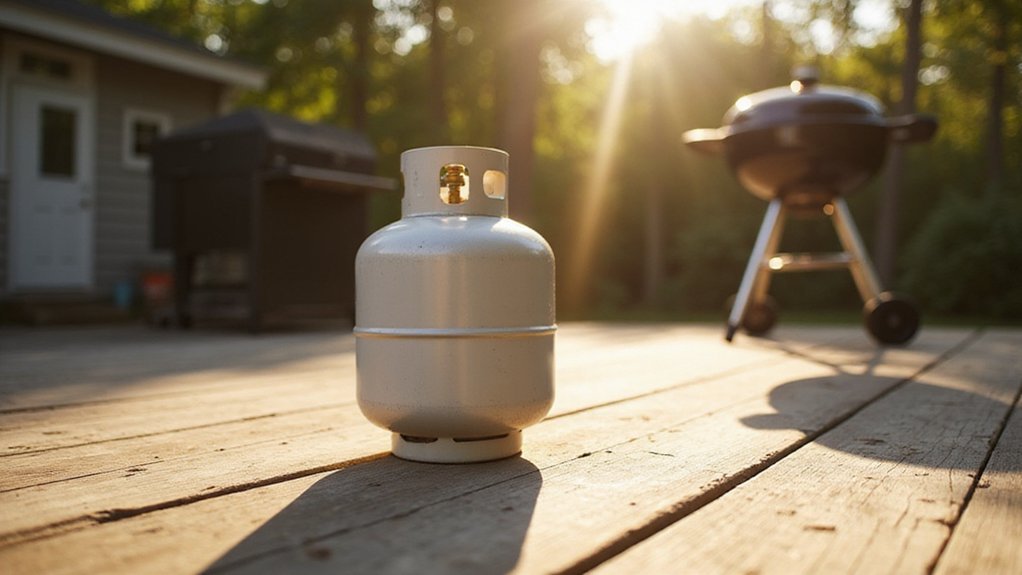
Knowing how to safely fill your propane tank can prevent accidents and ensure reliable use. It’s important to check for damage, fill only to 80 percent, and verify all connections for leaks.
By following the right steps, you can confidently handle your propane tank, avoiding common hazards.
The full details below will guide you through every essential safety measure.
Visually Inspect Your Propane Tank Before Filling
Before filling your propane tank, visually inspect its overall condition to identify any obvious hazards. Start by examining the tank surface. Rotate the tank to check the entire exterior for deep dents, bulges, cuts, or cracks. Look for heavy rust, abrasions, or gouges that could weaken the cylinder’s structure. Just like selecting the right cartridge pool filter relies on understanding its specific upkeep needs, ensuring your propane tank is suitable for refilling requires careful evaluation. Next, inspect the valve assembly. Confirm it is intact with no visible damage, and verify that the proper OPD (Overfill Protection Device) marking is present on refillable cylinders. Ensure all fittings are secure and look for signs of leakage, such as a hissing sound or an oily residue around the valve. One of the most effective ways to pinpoint a specific problem is to perform a visual inspection, just as you would when searching for a hole in a pool liner. Consistent preventative maintenance of your equipment, including your tank, helps avoid major issues and ensures safety. Never attempt to fill a tank that shows these defects, as it could pose serious safety risks.
Why Propane Tanks Must Be Filled Only 80% Full
Propane tanks must be filled only up to 80 percent of their capacity because propane expands significantly when heated. Filling the tank completely leaves no room for this expansion, which can create dangerous pressure levels. The 20 percent empty space, known as vapor cushion, provides space for the liquid to grow without increasing the pressure too much. This safety buffer prevents the tank from over-pressurizing as temperatures rise, reducing the risk of the pressure relief valve venting or even tank failure. This principle of managing thermal expansion is similar to the technology used in infrared saunas, which use electromagnetic radiation to generate heat directly within the body. Always adhering to this 80 percent fill limit is a critical safety practice and helps ensure safe propane storage, much like following a thorough DIY fire pit plan ensures a safe and successful build, similar to how balancing pool chemistry is essential after shocking a green pool.
Set Up a Safe, Ventilated Area for Filling
Choosing an outdoor, well-ventilated area is essential when filling a propane tank. The space should be far from buildings, ignitions sources, and flammable materials. Ensure the area is open enough for gases to disperse quickly, avoiding still corners or depressions where vapors can collect, as these low-lying vapors are a key factor in understanding the real explosion risks. Never fill a tank in windy conditions, as gusts can make controlling the process difficult, nor just before a storm, which increases risks. Use gloves and eye protection for safety, and confirm the surface is flat and free of debris. Before you begin, ensure your tank is within its certified expiration date and is free from significant rust, dents, or other damage. The process requires the same careful research and consideration of options as selecting the best above ground pool cover. Keep a fire extinguisher nearby and maintain a clear path for a quick exit if necessary.
Connect the Fill Hose Securely and Start the Flow
Connect the fill hose securely and start the flow by first inspecting all components. Check the hose for damage and ensure its fittings match your tank’s valve. Verify that the cylinder is secured upright and its valve is fully closed. When connecting the fill hose, align the threads carefully and turn clockwise by hand until snug, avoiding cross-threading. Once connected, secure any clamps to prevent leaks. Confirm that all connections are tight and that the area is clear of obstructions or hazards. Slowly open the hose-end valve to allow propane to enter the system gradually. Knowing your propane tank’s lifespan can help you plan your refills and maintenance schedule. During the initial seconds, keep the hose and tank in view to monitor for leaks or abnormal pressure, ensuring safe operation as the flow begins, as mixing different heating environments like an infrared sauna and steam requires careful consideration of materials and safety. Perform a leak test with soapy water on all connections after they are made.
Fill to the 80% Limit Using Weight or the Fixed Gauge
To fill your tank to the 80% level, you can use either the fixed liquid level gauge or the weight method. For the gauge method, open the small brass bleeder valve slightly. When you see a white spray, it indicates the liquid propane has reached the end of the internal dip tube, meaning the tank is at approximately 80% capacity. With the weight method, calculate the maximum fill by adding the tank’s Tare Weight to the net propane weight, which should not exceed 80% of the tank’s water capacity. Both techniques are mandated by safety regulations to prevent over-pressurization and accommodate different tank types, from small cylinders to large ASME tanks.
Use the Bleeder Valve to Check for Overfilling
Use the bleeder valve to check for overfilling. When using this valve, perform the test outdoors away from ignition sources, on an upright tank with its main valve closed. Carefully open the small brass bleeder valve briefly with the proper tool. Your observation is the key: a steady liquid stream indicates the tank has exceeded the 80% fill limit, while only mist or vapor suggests it is within safe levels. Propane efficiency for heating depends heavily on the accuracy of this critical 80% fill level to ensure proper vapor pressure for appliances. If you see liquid, carefully bleed the tank until vapor emerges. This method relies on the calibration of the bleeder valve and the propane vapor pressure to accurately measure the liquid level, similar to how effective pool sanitation relies on correctly measured chemical levels. It serves as your final, hands-on check before completing the fill to ensure the tank is not overfilled, much like following a detailed step-by-step guide ensures a project is done correctly the first time.
Check for Leaks With Soapy Water After Filling
Check for leaks with soapy water immediately after filling because it is your most reliable method for detecting escaping propane. Mix a solution of mild liquid dish soap and water at a ratio that produces visible bubbles when applied to leaks. Before beginning, shut the tank valve and ensure all appliance controls are off, but keep the entire gas system connected. Apply the soapy water liberally to all connections, including the tank valve, regulator, hose, and fittings, using a spray bottle or brush.
Slowly open the tank valve to pressurize the system. Watch all connection points closely for bubbles forming. Continuous or expanding bubbles indicate a leak, requiring you to close the valve immediately. If no bubbles appear, the system is leak-free; rinse and dry the connections before further use. This simple diagnostic step is similar to troubleshooting a green pool where visible indicators reveal an underlying issue. Propane’s distinctive odor comes from an added safety agent, but this soap bubble method is a more reliable way to spot small leaks that may not smell. Always perform this check in a well-ventilated area to prevent any accumulating gas from reaching a dangerous concentration. As with building any project that requires heat, such as a portable sauna, ensuring your fuel source is secure is a critical safety priority. Regularly checking with soapy water helps ensure your propane system remains safe and secure.
Store and Transport Your Filled Tank Correctly
After safely filling your tank and checking for leaks, proper storage and transportation become critical. Store your tank outdoors in a well-ventilated, open area at least ten feet away from buildings or ignition sources to minimize hazards. Keep it upright on a flat, non-combustible surface and secure it firmly to prevent tipping over. Protect it from direct sunlight and ensure temperatures do not exceed 120°F.
When transporting your tank, always keep it upright in an open truck bed or a ventilated vehicle cabin, never in an enclosed trunk. Never lay it sideways, as this compromises safety devices and increases the risk of rupture. Use straps to secure the tank tightly so it cannot shift during transit. Reduce transport time as much as possible and transfer the tank to its proper outdoor storage immediately upon arrival. Following these procedures helps prevent dangerous pressure buildup and accidental releases that could lead to fires or explosions.
How to Respond to a Propane Leak or Spill
If you smell gas or suspect a propane leak, immediate action is critical. First, evacuate everyone, including pets, and do so without delay, moving at least 350 feet upwind of the leak. Do not operate any electrical devices, light switches, or cell phones, as they can generate sparks that may ignite the gas. If it is safe to do so, turn off the main tank valve by turning it clockwise to shut off the supply. From a safe distance, such as a neighbor’s house, call 911 and your propane supplier to report the leak. Never attempt to find or repair the leak yourself; leave those tasks to trained professionals. Similar to how a suction-side pool vacuum relies on a sealed system to create effective cleaning pressure, a propane system must be completely sealed to function safely. Leak prevention is important, but ensuring safety requires inspection and repair by licensed experts before you re-enter the area or resume using any appliances. Properly containing fuel, much like a proper pool liner for water, is essential to preventing hazardous leaks and ensuring the integrity of the overall system.