Do you wonder whether infrared saunas or red light therapy can better support your health goals? They both offer benefits for relaxation, recovery, and skin but in very different ways.
Infrared saunas use heat to promote sweating and systemic relaxation.
Red light therapy targets cells with specific wavelengths for repair without significant heat.
Knowing how each works can help you choose the right option for your needs.
The details below will clarify the key differences.
Core Mechanism: Photobiomodulation vs. Heat Therapy
Infrared saunas and red light therapy operate through fundamentally different mechanisms—heat therapy versus photobiomodulation—even though both utilize light. Red light therapy employs non-ionizing light in a nonthermal process. Its photons are absorbed by cellular components such as cytochrome c oxidase, triggering biochemical signals that increase ATP production and promote cellular repair. This process occurs without significant tissue heating, making it purely a photobiomodulation mechanism, and its primary benefit derives from cellular energy increase. In contrast, infrared saunas work by transferring thermal energy to raise tissue temperature. This heating causes vasodilation, muscle relaxation, and increased blood flow, which is why exploring infrared sauna benefits reveals a focus on systemic effects. For those interested in heat-based projects, a DIY propane fire pit can offer a similar thermal warmth for outdoor settings. These distinct physical principles have been studied separately for a long time, emphasizing their different safety and efficacy profiles. Understanding this mechanistic divide is essential to avoid confusion and ensure proper application of each therapy.
Red Light vs. Infrared Wavelengths: What Reaches Deeper?
Red light typically operates within the 600-700 nanometer (nm) range, penetrating your skin to a depth of about 1 to 5 millimeters. In contrast, near-infrared (NIR) light ranges from approximately 700 to 900 nm and can reach depths of 3 to 5 centimeters. This greater penetration allows NIR light to access muscles, joints, and deeper tissues beneath the surface. If your goal involves skin surface issues, red light suffices. For targeting deeper, painful, or inflamed tissues, NIR is the more effective choice due to its ability to pass through multiple layers of tissue. This depth of penetration also underscores the importance of following proper safety protocols when using these modalities.
Session Experience: Sensation, Duration, and Setup
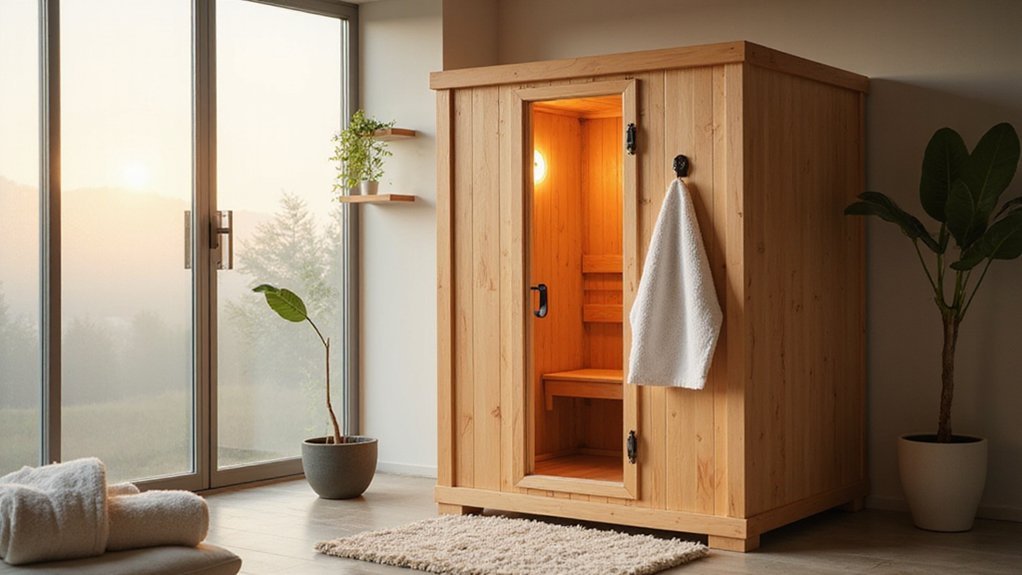
Stepping into an infrared sauna, you’ll immediately feel a deep, penetrating warmth that mainly targets muscles and joints, unlike the superficial heat of traditional saunas. This heat builds gradually within minutes, encouraging substantial sweating as your core temperature increases. Typical sessions last between 20 and 40 minutes, and customizing the duration is important—beginners should start with shorter periods. For a full wellness routine, engaging in a 60-minute session with gradual temperature increases can provide extended therapeutic benefits, including significant pain relief. Preparing for your session includes hydrating well beforehand, which supports skin hydration and safety. You’ll sit in a low-temperature cabin lined with heating panels, always keeping water nearby and sitting on a towel. This setup fosters relaxation and vasodilation, but you should exit the sauna if you experience lightheadedness.
Primary Benefits and Use Cases for Each Therapy
Infrared sauna sessions primarily enhance systemic wellness. The deep heat penetrates your body to improve cardiovascular function, support muscle recovery, and promote deep relaxation. These benefits make it an effective option for overall health maintenance, especially if you seek relief from chronic pain or want to boost skin health through increased circulation. While it is historically used for pain relief and skin benefits, its main role is in supporting your body’s internal systems and promoting a sense of overall well-being.
Key Differences at a Glance: A Quick-Reference Table
Infrared Sauna vs. Red Light Therapy: What’s the Difference?
Key Differences at a Glance: A Quick-Reference Table
Red Light Therapy and Infrared Sauna differ significantly in their core mechanisms and typical experiences. Red light therapy uses light-based stimulation at wavelengths of 630 to 850 nanometers to target cellular repair directly, and its application can enhance mitochondrial signaling to improve cellular energy production. These sessions are usually brief, lasting about 10 to 20 minutes, and focus on localized areas with minimal heat. In contrast, infrared saunas warm the entire body using far-infrared wavelengths between 3,000 and 10,000 nanometers. Sessions tend to be longer, up to 60 minutes, and promote systemic relaxation and sweating.
Red light therapy fits easily into daily routines without needing extended recovery time, making it convenient for regular use. Infrared saunas, however, require dedicated time and a space for heat exposure, as the body needs to cool down afterward. This makes the choice dependent on whether you seek a focused treatment or a full systemic relaxation session. Cost-wise, red light therapy often involves purchasing a device or paying clinic fees, while infrared saunas typically require a larger investment in a sauna unit or gym membership.
The core function of red light therapy is targeted cellular support, helping specific areas recover or improve, whereas infrared saunas provide systemic heat exposure to promote relaxation, detoxification, and overall well-being.
Choosing Based on Your Goals: Targeted Repair vs. Whole-Body Heat
Choosing between these wellness options depends on your specific goals: whether you need targeted cellular repair or systemic heat benefits. For localized concerns like skin rejuvenation, collagen production, or reducing inflammation in a particular joint or muscle, red light therapy is ideal. Its specific wavelengths penetrate tissues without significant heat, stimulating cellular energy production precisely where you need it. This makes it suitable for aesthetic improvements or focused recovery, similar to how a pool liner patch provides a targeted solution for a specific leak. For example, focusing on a problem area with this device requires the same precision as following step-by-step instructions for a detailed task.
On the other hand, if your aim is full-body relaxation, detoxification, or enhancing circulation on a systemic level, an infrared sauna is the better choice. It delivers whole-body radiant heat, raising your core temperature and inducing sweating. This process supports overall muscle loosening, cardiovascular health, and general recovery but does not target specific areas such as a knee or facial tissue. When deciding, consider the ongoing upkeep costs as part of your long-term investment, just as you would when comparing a sauna to a steam shower.
Can You Combine Red Light Therapy and an Infrared Sauna?
Yes, you can combine red light therapy and an infrared sauna, and doing so may enhance their combined benefits. Using them simultaneously merges the sauna’s heat with light-driven cellular signaling, which could alter how photons interact with your body. Safety considerations include proper setup to optimize safety and effectiveness, such as avoiding using red light therapy inside saunas through sweat or moisture, as this reduces light penetration. However, for clarity and safety, many prefer to use them sequentially—either doing the sauna first then lights, or vice versa. Sequential protocols allow each therapy to operate in a more “pure” state, making it easier to gauge their individual effects.
Historically, heat and light have been separate modalities of therapy, but modern practices now often combine them for convenience and potential synergy. Different cultures favor different routines, with some traditions opting for sequential methods to maximize safety and effectiveness. When combining these therapies, ensure safety measures are in place. Many infrared saunas have built-in panels, but moisture can be a concern for electrical components. Keep a distance of 6 to 24 inches from the red light panel, wear minimal clothing to maximize light exposure, and stay well-hydrated to prevent dehydration and enhance overall benefits.
Final Decision Checklist: 5 Questions to Answer
Deciding between infrared sauna and red light therapy depends on your specific goals and preferences. To determine the best fit, consider your primary aim. If you want targeted tissue repair or skin penetration without heat, red light therapy is ideal. It delivers specific wavelengths that penetrate deep into tissues, promoting healing and skin rejuvenation. Conversely, if you seek whole-body relaxation, detoxification, or improved circulation, an infrared sauna provides heat that induces sweating and whole-body benefits, similar to the effects of a traditional steam room.
Next, think about how you prefer to feel during treatment. Do you enjoy the warmth and sweating experience of a sauna, or do you prefer a quick, cool session with red light? Your comfort during treatment influences adherence and overall experience. Also, assess whether you need full-body or localized coverage. Saunas provide comprehensive body exposure, while red light can target specific areas effectively.
Tolerance for heat and the cleanup involved after sessions are practical considerations. If you are sensitive to heat or prefer minimal post-session cleanup, red light therapy may suit you better. For instance, a green pool is often caused by algae surviving oxidation when the shock treatment is insufficient, which is a different type of cleanup challenge altogether. Finally, review the evidence and safety profiles of each modality; red light therapy is generally safe with minimal precautions, while saunas require mindful hydration and temperature regulation. Your answers will help identify the modality that best aligns with your needs and lifestyle.