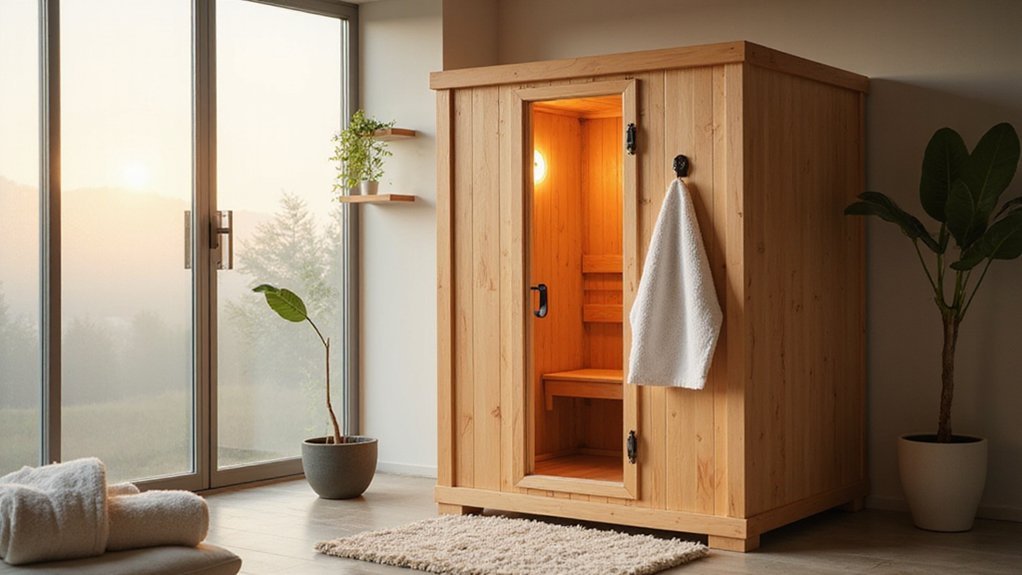
Thinking about adding an infrared sauna to your home? The cost can vary widely, from around $1,000 for a basic unit to over $15,000 for a luxury cabin.
Your total expenses depend on choices like size, features, and installation needs. Keep reading to get a clear picture of what to expect when budgeting for your new sauna.
What Makes Up the Base Cost of an Infrared Sauna?
The base cost of an infrared sauna depends heavily on several core factors. Cabin size is one of the most significant influences: a single-person unit typically starts around $1,000, while larger, luxury models can exceed $15,000. The materials used in construction also play a crucial role. Basic composite cabins may cost around $2,500, but upgrading to high-quality woods or adding features like Himalayan salt panels can push the price into the $4,000 to $10,000 range. Assessing the quality of materials is just as critical as when selecting durable outdoor furniture. Understanding the tank capacity equivalence between different fuel sources can help you compare the long-term operating costs of various home appliances.
The feature set further impacts the starting price. Basic models with standard heating panels and minimal controls often fall within the $1,000 to $3,000 range. In contrast, models with integrated app controls, advanced heating systems, and customizable options can escalate to $14,000 or more. Getting a balanced setup right the first time can save you money and future adjustments, much like following step-by-step instructions for a home maintenance project. Keep in mind that these base prices are separate from additional costs such as installation, delivery, and accessories, which can add significantly to the overall expense.
What Are the Hidden Initial Costs of Setup?
Setting up an infrared sauna involves initial costs beyond just the unit’s price. Permitting expenses can range from $50 to $1,200 depending on your local regulations, and these are necessary to ensure your installation complies with building codes. Site preparation costs vary widely; renovating a basement might cost between $3,000 and $10,000, while pouring a new concrete foundation can be in the $1,000 to $4,000 range. Careful DIY planning can help manage these variable expenses, much like a well-executed construction project. Researching these expenses upfront is similar to finding the best deals on essential gear like propane tanks for outdoor grills.
Electrical work is another substantial expense. An electrician’s minimum fee typically starts around $150, but installing a custom circuit breaker or upgrading grounding systems can add $200 to $600, or even $1,200 in some cases. Notably, infrared saunas are often chosen because they conveniently plug into a standard 120V outlet, avoiding the need for more expensive and complex electrical work. If your sauna requires ventilation ducting, expect to spend between $800 and $2,500 to ensure proper airflow and safety. Accounting for these hidden initial costs helps you budget more accurately and avoid surprises during your setup process. This proactive budgeting is worthwhile, as users often report significant real-world use benefits from consistent infrared sauna sessions.
How Do Brand and Model Choices Affect the Price?
Your choice of brand and model directly impacts the final cost. Premium brands like Sunlighten tend to have higher prices due to their established reputation and trustworthiness, while budget brands offer more affordable options. The model you select determines key features and size, with smaller one-person units being more budget-friendly and larger four-person cabins costing significantly more. Much like selecting the best cover for above ground pool, evaluating key options is crucial for finding the right fit for your needs and budget.
Material choices within construction also influence pricing. Standard woods are usually more cost-effective, whereas premium finishes and high-quality materials drive up the expense. Additionally, the specific heating technology you choose plays a role; understanding the performance differences between far infrared and full spectrum systems is key. Basic far-infrared systems are less costly, while full-spectrum systems with features like chromotherapy add to the overall price. Your selections in brand, model, material, and features collectively define the investment required.
Are Long-Term Operating Costs a Major Expense?
Long-term operating costs are generally quite low for infrared saunas. Your main ongoing expense is electricity, which is very affordable—around $0.25 to $0.48 per session. For a two-person unit used daily, this adds up to approximately $4.50 to $15 each month. Over a year, your total electricity cost usually stays below $125. This is similar to maintaining a clean, algae-free swimming pool where pool shock is used as an effective and routine treatment, a process that begins with proper winter chemical kits. While regional electricity rates and your frequency of use can influence your bill, these costs remain surprisingly affordable compared to traditional saunas or steam rooms. It’s important to focus only on the safe disposal of items like propane tanks, and not electrical appliances. Overall, long-term expenses are minimal, making infrared saunas a cost-effective addition to your wellness routine.
What Is the Total Cost of Ownership Over Time?
The total cost of owning an infrared sauna over five years typically ranges from $5,000 to $13,000. This includes the initial purchase price plus ongoing electricity expenses. Monthly electricity costs usually fall between $8 and $12, which translates to about $0.20 to $0.40 per session. For a decade of ownership, the total expenses generally range from $2,800 to $9,600. Installation costs, especially for custom units, can add to your initial investment. Understanding red light therapy can help clarify the different benefits and costs associated with various wellness technologies. Maintenance costs are relatively low, averaging around $200 over ten years — especially with premium models that come with strong warranties. Efficient far-infrared saunas tend to cost less to operate over time than traditional electric saunas, making long-term expenses more manageable. Having the right tools on hand is just as important for a smooth installation as it is for replacing a pool liner. A top cordless vacuum is another significant household purchase that requires evaluating upfront and long-term value.