If your pool water is becoming cloudy or filled with floating leaves and debris, you might be wondering how to keep your pool clean with minimal hassle. A pool skimmer is an essential tool that helps remove surface debris before it sinks and causes problems.
It works connected to your pump to efficiently trap leaves, bugs, and other floating particles, keeping your water clear and your equipment protected. Keep reading to see how a pool skimmer can make pool maintenance simpler and more effective.
What Is a Pool Skimmer and How Does It Work?
A pool skimmer works by creating a suction at the waterline opening, which draws the surface water into the skimmer. Your pool pump powers this process, pulling in floating debris such as leaves, insects, or pollen along with the water. A pivoting weir door at the opening helps ensure only the surface layer is captured, allowing water from below to flow freely. This first line of defense actively prevents debris from sinking to the pool floor. Inside the skimmer housing, a basket traps the debris, preventing it from reaching the pump or filter and causing clogs or damage. Using a complementary pool cover when the pool is not in use can significantly reduce the amount of debris that enters the skimmer in the first place. Consistent maintenance routines, like cleaning your skimmer basket, can be enhanced by the therapeutic benefits of heat from an infrared sauna to aid in post-workout recovery. Proper pronunciation of related terms, like the Adirondack chair often placed poolside, can be helpful when discussing outdoor maintenance. Once the debris is removed, the cleaned water continues through the pump and filter, maintaining proper circulation and water quality in your pool.
4 Main Types of Pool Skimmers
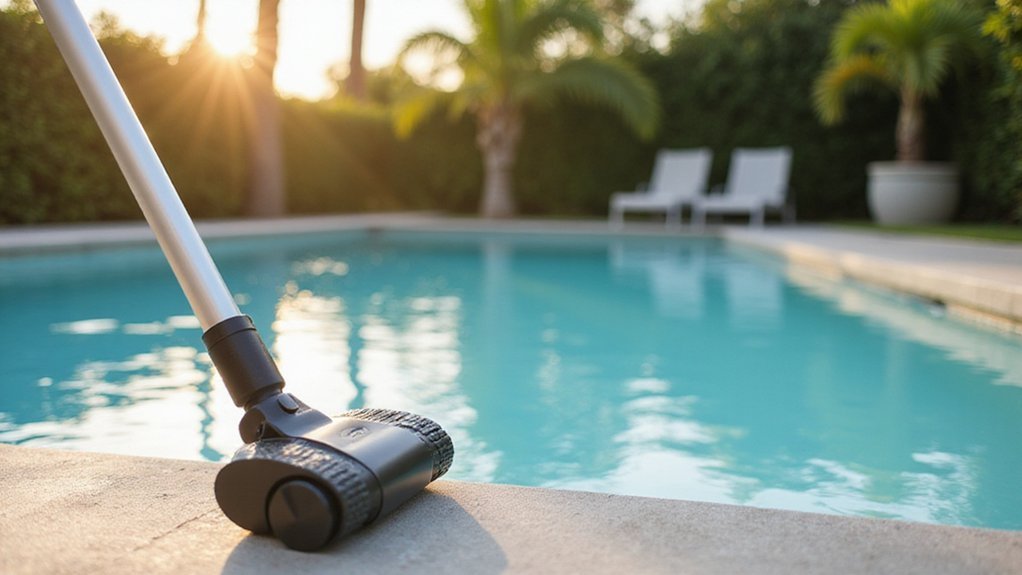
There are four main types of pool skimmers, each designed for different pool sizes and cleaning needs. Wall-mounted skimmers are built into the pool wall and connect directly to your pump. They use a basket and weir door to remove floating debris from the water’s surface efficiently. Commercial pools often feature gutter-type skimmers, which are continuous perimeter channels that handle large debris loads and heavy circulation demands effectively. For enhanced cleaning, floating or robotic skimmers operate independently on the water’s surface, automatically collecting debris without manual effort. Manual hand skimmers mounted on a pole are ideal for spot-cleaning and targeting specific areas for debris removal. Your selection among these types depends on the size, frequency of use, and integration with your pool’s circulation system. Factoring in ongoing energy efficiency during your selection can also influence long-term operational savings. Choosing the right type can significantly impact your pool’s hygiene and overall system performance. For optimal water clarity, it’s important to balance your skimmer system with a regular granular shock treatment regimen.
Why a Skimmer Is Essential for a Healthy Pool
A skimmer is essential for your pool’s health because it efficiently removes floating debris like leaves, insects, and debris before they sink. This prevents decomposition that can feed algae growth, cloud the water, and put extra strain on your chemical balance. Regular skimming helps keep the water surface clear, which improves visibility and safety around the pool. It also acts as a pre-filter, capturing larger particles that could clog your pump or main filter, reducing wear and avoiding costly repairs. For example, addressing a tear in the liner immediately is critical, as a hole in your pool liner can lead to much larger problems, including water loss and structural issues. Additionally, by pulling water from the warmest surface layer, the skimmer promotes better circulation and can help balance water temperature throughout the pool. Consistent use of the skimmer ensures your water remains clean, balanced, and inviting. For optimal results, this process works best when you first manually vacuum the pool to remove settled debris. This proactive maintenance can be as satisfying and financially prudent as other well-planned DIY home projects for your outdoor space.
How Your Skimmer Basket and Weir Door Work Together
The skimmer basket and weir door work together to effectively remove floating debris from your pool surface. The weir door creates the surface skimming action by allowing water to flow over its edge, which speeds water into the skimmer throat. This flow naturally pulls floating debris like leaves and insects into the chamber. The basket inside the chamber then captures and filters out most of this debris before the water reaches the pump. When your pump turns off, the weir door closes to prevent debris from floating back into the pool. It is powered by suction from the pump to pull it down during operation, and its foam-filled design allows it to float back up when the pump stops. Preparing your pool’s filtration system, including the skimmer, is a critical first step before beginning the winterization process. This coordinated system ensures continuous surface cleaning and prevents debris from undermining your equipment’s efficiency, just as a high-quality heating system is vital for maintaining a comfortable hot tub environment, and just like selecting the right durable canopy fabric is key for long-lasting patio shade.
How to Keep Your Pool Skimmer Working Efficiently
To keep your pool skimmer working efficiently, you should develop a regular cleaning routine, maintain proper water levels, and improve circulation. Empty the skimmer basket at least once a week, and more often during pollen season or storms to prevent clogs. Keep the water level about halfway up the skimmer opening to ensure optimal suction. Adjust your return jets to create a circular flow that helps push debris toward the skimmer. For enhanced debris prevention, consider upgrading your skimmer with accessories like a skimmer sock, which captures fine particles before they reach the basket. Also, ensure the skimmer weir door is intact and functioning to prevent debris from washing back into the pool when the pump is off. Regularly inspect the skimmer housing for cracks or air leaks that can reduce suction power. A secure and watertight pool skimmer installation is fundamental to preventing these types of leaks and maintaining performance. Understanding the proper vacuum connection can also help maximize suction for cleaning tasks. After cleaning the skimmer or adding chemicals, be mindful of the recommended wait time before allowing swimmers back into the pool. These simple, consistent actions will help your skimmer perform at its best and keep your pool cleaner longer.
A Simple Pool Skimmer Maintenance Checklist
Daily, you should remove debris from the skimmer basket to prevent overflows and maintain proper circulation. Empty the basket regularly, especially after a storm or heavy debris fall, to ensure it doesn’t clog and to keep the skimmer functioning efficiently. Check the weir’s motion to make sure it moves freely; a sticking weir reduces skimming effectiveness and can cause water to overflow or debris to remain in the pool. This simple daily step helps prevent pump strain and maintains clear surface water. For a stable foundation that supports your entire pool structure, ensure your above ground pool sand is properly installed and maintained. Regular cleaning is a form of cost-effective upkeep that protects your larger equipment investment, much like choosing infrared sauna therapy can be a preventative health investment with long-term benefits.
Upgrading or Troubleshooting Your Pool Skimmer
If your pool skimmer isn’t effectively removing debris, you may need to upgrade or troubleshoot it. Check its current performance first; consistent debris buildup or algae indicate insufficient skimming. Consider larger models or auxiliary units designed for high-debris areas to boost capacity. You can also add simple accessories like skimmer socks or improved weir doors to enhance function without a full replacement. Managing your equipment for optimal recovery is as important as considering the best time for infrared sauna in a fitness routine. For heavy cleaning tasks beyond skimming, selecting a top-rated pool vacuum can significantly improve your pool’s cleanliness.
When installing upgrades or replacements, ensure the skimmer aligns properly and the seal is tight to prevent leaks. Installation of a new skimmer involves carefully cutting a rectangular opening, fitting a gasket, and securely fastening the housing with a hand screwdriver to avoid stripping the screws. After installation, prime the system by turning on the pump to verify strong suction and proper water flow. To troubleshoot issues, start by inspecting for common problems: a clog in the line or a leak can cause low suction. Regularly check the skimmer basket and weir for obstructions, as these blockages reduce skimming efficiency and can lead to debris accumulation in the pool.