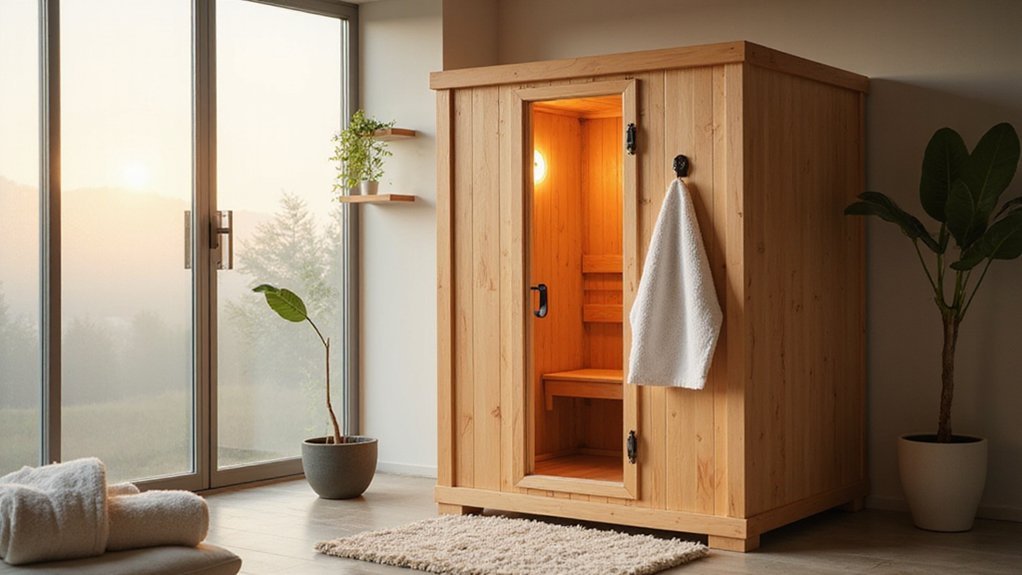
Wondering how hot an infrared sauna gets? They usually reach temperatures between 110°F and 140°F, which is cooler than traditional saunas but still effective.
Because they heat your body directly with radiant energy, you can enjoy their benefits at more comfortable temperatures.
Keep reading to find out what temperature is best for you.
Core Infrared Sauna Temperature Ranges Explained
Infrared sauna temperature ranges typically fall between 110°F and 140°F. Starting at lower temperatures between 98°F and 115°F is best for beginners or if you’re seeking stress relief, as your infrared sensitivity makes these settings more comfortable. For muscle recovery, most users prefer a medium range of 116°F to 131°F, with a comfortable target around 115°F to 125°F. It’s important to monitor your body’s response and avoid overshocking your system with too rapid a temperature increase. If fat burning is your goal, you’ll need to push into higher temperatures from 132°F up to 149°F, keeping safety caps at 149°F to prevent overheating. While premium models may reach approximately 170°F, standard units often top out at 140°F or 150°F. Always prioritize your comfort and safety over trying to hit the highest temperatures, and remember that gradual adaptation is key, just as careful inspection is crucial for effective repairs. Research suggests these specific temperature ranges can help unlock the key benefits of infrared sauna use for targeted wellness goals.
Why Are Infrared Sauna Temperatures Lower Than Traditional Saunas?
Infrared saunas operate at lower temperatures—typically between 110°F and 140°F—compared to traditional saunas, which often reach 150°F to 200°F. This is because infrared heaters directly emit radiation that heats your body tissues without needing to warm the surrounding air extensively. As a result, you can experience effective sweating and cardiovascular benefits at these lower temperatures, making the session more comfortable and tolerable. Unlike traditional saunas that rely on convection to raise air temperature, infrared saunas bypass heating large air volumes and focus energy deep into your tissues. Additionally, the lower temperature and minimal humidity mean you won’t experience the intense heat and moisture typical of steam saunas, reducing potential discomfort or risk. This difference in operating temperature also makes infrared saunas safer for longer sessions and suitable for individuals sensitive to high heat or humidity. For example, while a 20 lb propane tank can fuel a portable heater for many hours, the efficient direct heat of an infrared sauna provides benefits without requiring such high ambient temperatures, much like selecting the correct heater element is crucial for maintaining any heated water system efficiently. Properly managing waste from heating systems, such as empty propane tanks, requires responsible handling.
Maximum Infrared Sauna Temperatures: By Brand and Model
Infrared saunas generally have maximum temperature ratings that vary depending on the brand and model. Premium brands like Sun Home and Finnmark often list maximum temperatures around 165 to 170°F, with some of these ratings independently verified for accuracy. Mid-range models from brands such as Dynamic Saunas and Golden Designs typically reach a top temperature near 140°F. Entry-level far-infrared cabins usually max out at about 140°F as well. Applying money-saving DIY principles can help you evaluate the value of these features across different price points, similar to calculating propane consumption for a hot tub. A thorough comparison of top options is crucial for making an informed purchase decision. It’s important to differentiate between the manufacturer’s stated maximum temperatures and the typical operating ranges for safe use. Most consumer units operate comfortably between 120°F and 140°F, but a higher maximum rating indicates a more powerful heater capable of producing stronger infrared heat output.
Targeting Specific Benefits by Adjusting Your Sauna Temperature
Adjusting your infrared sauna’s temperature allows you to target specific health benefits effectively. For muscle recovery and pain relief, set it between 120°F and 130°F. This range helps increase blood flow and soothe sore muscles without causing excessive discomfort. If your goal is stress reduction and better sleep, lower temperatures from 100°F to 115°F are more suitable, creating a calming environment that promotes relaxation. For this reason, many manufacturers now include dual seating in their designs for a couple’s sauna to share this relaxing experience. Having the right tools on hand, like those needed for replacing a pool skimmer, is just as important for maintaining a sauna as it is for any home project, which is why understanding chemical wait times is a key part of safety and planning.
To support fat burning, higher temperatures between 130°F and 140°F are recommended. These settings can help boost your metabolism and encourage calorie burn during your session. For cardiovascular health, a moderate range of 110°F to 130°F works well, providing gentle cardiovascular stimulation without undue stress.
You can also fine-tune the temperature based on athletic warm-ups or respiratory relief needs by selecting the appropriate range for each goal, ensuring your sauna session maximizes the specific benefit you’re after.
Finding Your Ideal Infrared Sauna Temperature and Starting Safely
Starting at a temperature between 100°F and 120°F is ideal for new infrared sauna users. Aim for a setting around 105°F to 115°F to ease your body into the experience. Your thermal comfort should always come first, so if you are heat-sensitive, begin at or below 100°F. This cautious approach helps prevent overwhelming your body and allows gradual acclimation, similar to following a propane tank’s safe lifespan. Don’t worry about minor fluctuations in cabin temperature; focus on how you feel instead, similar to how pool clarity issues can persist despite seemingly balanced water chemistry. You’ll discover your personal ideal temperature through trial, considering your tolerance and overall health. Ensuring your heater has proper safety features is as important as setting the right temperature. As you become more comfortable, you can slowly raise the temperature, but always prioritize safety and comfort when starting out.
Essential Safety Guidelines and Limits for Infrared Sauna Use
To ensure your infrared sauna session remains safe, keep the temperature below 150°F. The ideal range is between 120°F and 140°F, which provides effective sweating without risking overheating. Remember the “200 Rule”: your temperature in Fahrenheit plus session time in minutes should not exceed 200. For example, at 140°F, limit your session to 60 minutes or less. Start with 10-15 minutes as a beginner and do not extend beyond 30 minutes, regardless of your tolerance level. Hydration is crucial—drink water before and during your session to prevent dehydration. If you start feeling dizzy, nauseous, or uncomfortable, exit immediately. Always check your sauna for electrical safety and cleanliness before use to avoid any hazards. Following these guidelines helps maximize benefits while minimizing health risks.