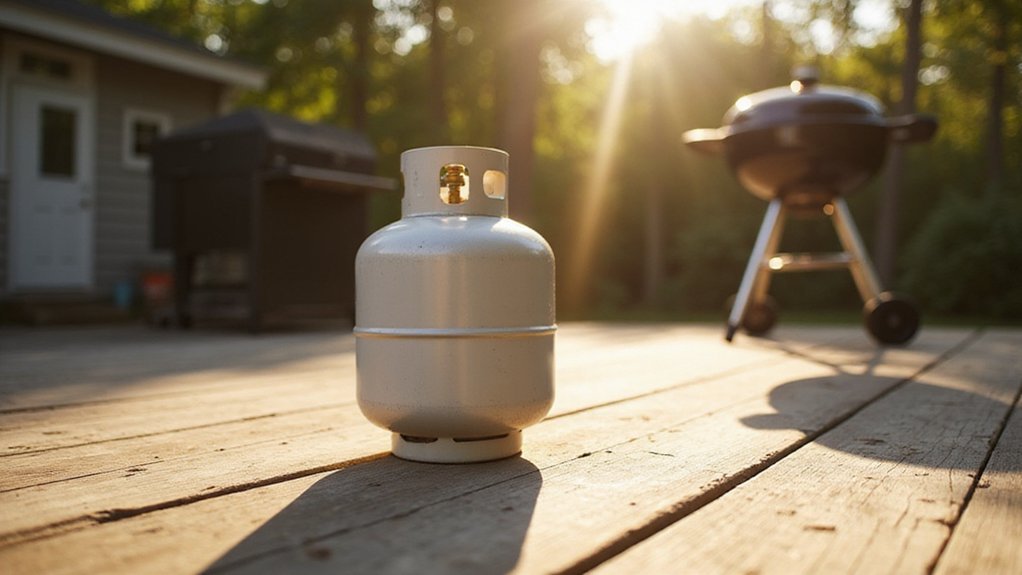
Wondering if you can safely run a patio heater inside your garage? The answer is yes, but only if you follow strict safety rules. Choosing an electric model over gas is crucial to prevent dangerous carbon monoxide buildup.
With proper ventilation, stable placement, and careful monitoring, you can warm your garage safely. Keep reading to see exactly how to do it right.
The Deadly Risk of Gas Heaters in a Garage
Using a gas patio heater in your garage is extremely dangerous and can lead to lethal carbon monoxide buildup. This colorless, odorless gas binds to your blood over 200 times more effectively than oxygen, depriving your organs of vital oxygen. Symptoms such as headache, dizziness, or nausea often appear before you lose consciousness, making detection difficult. Gas leaks from damaged hoses can also create an explosive atmosphere, especially in the confined space of a garage, which is a critical point addressed in any propane tank safety guide. Moreover, the heater releases toxic combustion byproducts like nitrogen dioxide along with carbon monoxide. Without proper ventilation, these dangerous gases can accumulate rapidly, turning a simple heat source into a serious health and safety hazard you should avoid entirely. This hazard is a primary reason professional builders emphasize outdoor fire pit safety for all fuel-burning appliances. This is in stark contrast to the safe, well-researched infrared sauna benefits promoted for improving wellness in properly ventilated spaces.
Ventilation and Clearance: Non-Negotiables for Garage Heaters
Ventilation and clearance are essential safety measures for garage heaters and must be strictly followed. For gas heaters, you need to keep garage doors fully open and ensure a vented area of at least 4 square inches per274 1,000 BTU. This allows harmful gases, including carbon monoxide, to escape and helps control odors. Maintaining proper ventilation is critical to prevent the buildup of poisonous gases. It is as crucial as preparing your pool water before shocking a green pool.
Clearance from combustibles is equally important. Typically, you should keep 24 to 36 inches of clearance from ceilings, walls, and stored items. This space prevents heat from igniting nearby materials and ensures safe operation. A key first step for any project involving heat sources, like building a DIY hot tub heater, is gathering all necessary tools and following a precise plan. While aesthetic considerations might suggest placing the heater closer to certain areas, safety must always take precedence. Electric heaters usually require less clearance, generally 12 to 24 inches from ceilings, but ignoring these distances can still pose fire risks. Never block ventilation openings or reduce clearance distances, as doing so compromises safety and increases the risk of fire or carbon monoxide poisoning.
Is a Garage Heater Safe? Only Under These Conditions
A garage heater can be safe only if you meet very strict conditions that are quite different from outdoor use. You must ensure excellent ventilation by keeping doors or windows wide open to prevent dangerous carbon monoxide buildup, which is similar to the necessary shock treatment levels needed for a swimming pool to eliminate contaminants. A clear space of at least three feet from all walls, stored items, and especially flammable liquids like gasoline, paint, or solvents is essential. Complete insulation should also be in place before heating begins, as it is a non-negotiable step for efficiency and safety. Selecting a durable product designed for harsh environments is equally crucial for any outdoor-rated equipment, just as you would when choosing a winter pool cover. Use only a dedicated, properly rated electrical outlet—never an extension cord—to avoid overloading your garage’s wiring system. Getting the right angle for maximum coverage, much like you would with patio umbrella tilting, requires careful planning for both comfort and safety. Additionally, the heater must never be left unattended when in use. Because these conditions are difficult to consistently maintain, manufacturers explicitly forbid using patio or outdoor heaters inside a garage.
What to Look for in a Garage-Safe Electric Heater
When selecting a garage-safe electric heater, safety features, proper sizing, certification, and maintenance are essential. Look for units with built-in protections such as overheat sensors and a tip-over switch to prevent fire hazards. A cool-touch exterior enhances safety when handling the heater. To size your unit correctly, calculate roughly 10 watts per square foot; for example, a 200-square-foot garage requires a 2,000-watt heater. Always verify that the product has recognized certifications, such as UL or ETL, which indicate compliance with safety standards. Choose a model with adjustable thermostat settings for precise temperature control, similar to the best rated infrared sauna models. Keep in mind that interior garages typically do not require outdoor-rated heaters. For particularly large spaces, considering a DIY sauna kit for a dedicated heat room can be a more efficient project. Regular maintenance, including inspecting cords and testing safety functions before each season, is crucial for ongoing safety. High-wattage models might need dedicated circuits to handle the electrical load safely. This ensures consistent performance, much like finding the right two-person sauna for your needs.
How to Position Your Heater Away From Garage Fire Hazards
To prevent fire hazards, you should position your garage heater at least three feet away from all combustible materials. This means keeping it clear of items such as gasoline cans, paint thinners, cardboard boxes, and fabrics, which can easily ignite if too close. The heater must be placed on a flat, stable, non-flammable surface to avoid tipping over, which could cause sparks or heat buildup. Additionally, ensure the heater is positioned at least three feet horizontally from walls and six feet vertically from the ceiling. This spacing promotes proper airflow and prevents dangerous heat concentrations. Never place the heater in a corner or block garage exits or safety equipment, as doing so can compromise safety and accessibility during emergencies.
The Essential Garage Heater Maintenance Check
Regular maintenance checks are crucial for safe and efficient heater operation once your heater is properly installed. Start with a visual inspection to look for rust, cracks, or damaged venting that could compromise safety or performance. Clean or replace air filters and clear any blockages in the vents to ensure proper airflow. Annually, test the thermostat calibration to confirm accurate temperature control, and inspect the ignition system by observing the flame and checking the exhaust for proper venting. Lubricate moving parts to prevent wear and ensure smooth operation. While you can perform these routine checks yourself, scheduling a professional service once a year will help optimize the heater’s performance and safety. For example, when choosing a new unit, it’s wise to consult reviews comparing the top fire pit options to understand safety and performance features, just as you would compare the best skimmer for above ground pool for optimal pool maintenance. Selecting a reliable heat source involves careful comparison, similar to finding the best heater element for a hot tub. Don’t forget to test your garage’s carbon monoxide detector regularly and keep a minimum three-foot clearance around the heater to prevent obstructions and ensure proper heat distribution. Following this routine helps keep your heater running efficiently and safely over time.
Safety Gear You Must Have in Your Garage
Proper safety gear is essential in your garage to prevent injuries and handle emergencies effectively. Keep a fire extinguisher with Class B and C ratings mounted within reach, and ensure it has a minimum of 150 psi pressure to be effective against flammable liquids and electrical fires. Choosing the right heater for hot tub is just as critical for safe operation in its intended outdoor environment. Protective gloves are crucial; mechanic gloves are best for general repairs, while rubber or welding gloves protect against high heat. Always wear safety glasses to shield your eyes from debris and splashes, and sturdy shoes to prevent foot injuries. Install a carbon monoxide detector and a smoke alarm to alert you to dangerous fumes or fires. A well-stocked first aid kit is non-negotiable for treating cuts, burns, or other minor injuries quickly. Additionally, store flammables in fireproof containers and keep jack stands readily available to support vehicles securely, preventing accidental collapses or falls. When working with loud equipment, always wear foam earplugs to protect your hearing.
Your Final Garage Heater Safety Checklist
Ensure your garage heater is safe to operate with this final safety checklist. First, check that the heater is placed at least three feet away from all flammable materials, including paper, solvents, and fuels. The heater should sit on a flat, stable surface to prevent tipping. Adequate ventilation is crucial; open windows or have a direct vent to allow fresh air to circulate and reduce the risk of toxic buildup, much like the steam sauna ventilation required to maintain a safe environment. Confirm that your carbon monoxide detector is tested and functioning properly, as these devices are vital for detecting dangerous leaks. Before starting any work, gather all necessary tools and materials by reviewing the heater’s manual or a reliable repair guide, similar to how you’d weigh the filter performance and upkeep when choosing pool equipment.
Make sure you are plugged into the correct outlet that can handle the heater’s power requirements, and inspect fuel lines or cords for signs of damage such as cracks, fraying, or leaks. Keep accessible safety equipment nearby, such as a fire extinguisher rated for electrical or combustible fires, ideally placed near the exit for quick access. Never leave the heater unattended while it’s operating, and always turn it off before leaving the garage or refueling to prevent accidental fires or hazardous conditions.