Figuring out whether a propane or natural gas fire pit is right for you depends on your lifestyle and home setup.
Propane fire pits are portable and easy to move around, while natural gas options are fixed but usually cheaper to operate over time.
Your choice comes down to how much flexibility you want and whether you own or rent.
Keep reading to see which option fits your needs best.
Natural Gas vs. Propane for Fire Pits: Core Differences
Natural Gas vs. Propane for Fire Pits: Core Differences
Propane is significantly more energy-dense than natural gas, with approximately 2,500 BTU per cubic foot compared to natural gas. This means propane burns hotter per volume, which directly influences its heat output and thermal efficiency at the burner. The fundamental operation relies on a controlled release of fuel and its combustion with oxygen to generate flames. Since propane’s heavier-than-air characteristic requires careful handling and secure storage, it demands specialized tanks and fittings, unlike natural gas, which dissipates upward and is easier to supply through existing pipelines. Equipment must also be matched to each fuel: propane needs specific orifices and regulators designed for its pressure, while natural gas uses different specifications. For optimal combustion, propane setups often include an air mixer to pull in oxygen before ignition. Although propane’s density allows it to provide concentrated heat, adjusting burner size and design can enable both fuels to produce a comparable fire pit experience, similar to how different sauna types can achieve targeted therapeutic effects. For a DIY approach, you can follow a step-by-step plan to build your own propane fire pit and save money.
Installation: Cost and Fuel Accessibility Compared
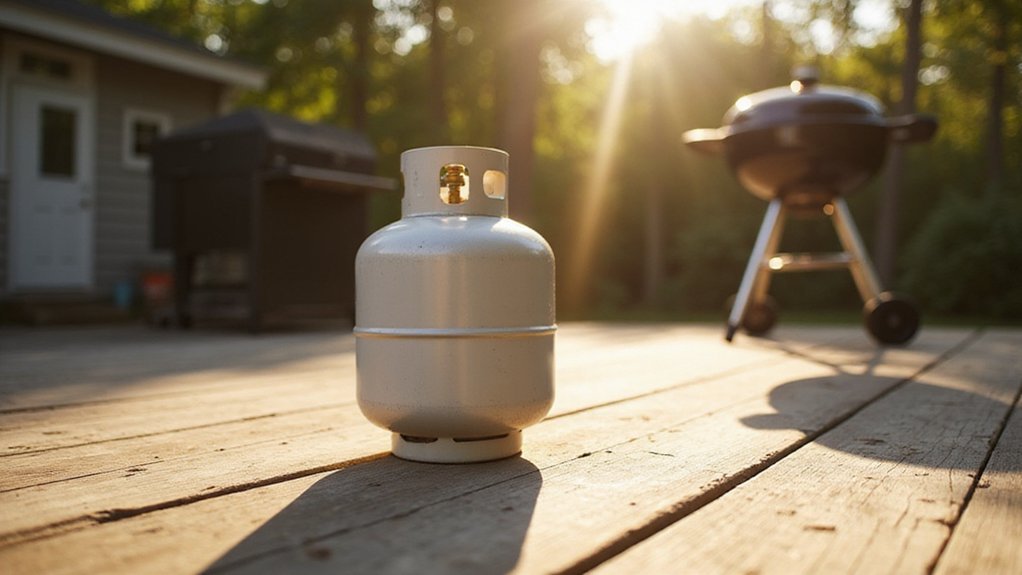
Installation costs and fuel accessibility differ significantly between propane and natural gas setups. Propane installations are typically less complex and more flexible, often allowing you to install a portable unit yourself for outdoor use. A basic above-ground propane fire pit usually costs around $850 for professional installation. Refilling or exchanging propane tanks is straightforward because of their widespread availability and requires frequent refills for extended use. Understanding energy efficiency ratings is crucial when calculating long-term operational costs. Ensuring you get the right result hinges on following the correct steps.
Natural gas, on the other hand, requires a permanent gas line installed by a licensed technician. The cost for running a gas line ranges from $14 to $25 per foot, which can push total installation prices to between $1,000 and $3,000 or higher for intricate layouts. While this creates a fixed, reliable fuel supply, it also limits your ability to relocate the setup later. For any permanent home installation, planning for proper chemical maintenance is a key aspect of long-term upkeep. Built-in natural gas fire pits blend seamlessly into your landscape, whereas propane offers greater flexibility in placement, making it easier to adjust your outdoor design.
How Do Operating Costs Compare Over Time?
Over time, natural gas is significantly more cost-effective than propane for operating a fire pit. Propane costs roughly five times more per BTU than natural gas. For example, a 125,000 BTU unit used 100 hours annually could cost about $153 with natural gas each year, compared to around $814 with propane. Over five years, these costs accumulate to roughly $765 with natural gas versus over $4,000 with propane. While propane offers portability with portable tanks, its higher per-BTU price makes it less efficient for frequent use, and propane tanks require refilling which adds to the ongoing effort and cost. For a typical patio heater, a single 20 lb propane tank might last only about 10 hours. Just as precise adjustment is vital for pool maintenance, achieving the right suction balance is key for efficient system operation. Natural gas, being usually supplied through a fixed line, provides consistent savings over time, especially for regular fire pit operation. This highlights the importance of getting your initial setup right, just like a crucial pool site preparation for a long-lasting installation. So, if you plan to use your fire pit frequently, natural gas will generally save you more money in the long run.
Which Fuel Burns Hotter and Cleaner?
Natural gas burns hotter and more intensely than propane, but propane produces a cleaner burn. Propane heats up to roughly 3,600 degrees Fahrenheit, resulting in a taller, brighter flame that warms your space faster. It also delivers about 2.5 times the usable energy per cubic foot, meaning more immediate heat output, and its fuel is stored efficiently in portable 100-pound propane tanks. However, natural gas typically burns more cleanly, releasing fewer greenhouse gases and particulate matter per unit of heat. Its lower emissions make it a better choice for reducing environmental impact, even though it burns at a slightly lower temperature than propane. Troubleshooting a flame that won’t stay lit is also easier with a propane system, as it uses a simple pressurized fuel source. If you prioritize maximum heat, propane is the hotter option; if you focus on lower emissions, natural gas is cleaner overall. The performance and heat output of either fuel can be further enhanced through specific burner design like the Crossfire system, just as pool maintenance is improved with a consistent maintenance schedule.
Safety, Maintenance, and Convenience Compared
Natural gas fire pits are generally safer than propane because the gas dissipates upward and relies on utility lines rather than pressurized tanks. Choosing the right fuel source, similar to selecting key features for a home steam sauna, can maximize benefits based on your specific needs and setup. To ensure safety, maintain at least a three-foot clearance around the fire pit and keep a Class B or C fire extinguisher nearby. If you use propane, always store your spare tank outside and upright on a stable non-flammable surface. Regularly inspect gas lines and burners for leaks, especially before each use, and perform a soap-and-water leak test annually on all connections, a critical step familiar from maintaining pool equipment. Both fuel types require these safety checks, but natural gas’s inherent dissipation reduces the risk of gas buildup in case of leaks.
Portability: Can You Move Your Fire Pit?
The ability to move your fire pit depends largely on your fuel choice. A propane fire pit is highly portable, allowing you to reposition it easily for seasonal changes or special events without needing a fixed connection. You’re only limited by safety clearances and your aesthetic preferences for placement. In contrast, natural gas fire pits are essentially permanent fixtures because moving them involves costly, professional work to reroute the underground gas line. If you value flexibility in your outdoor setup or plan to change your layout frequently, propane is the preferable option. Always consult regional regulations regarding fire pit placement, as these can influence what is permissible for both types. Conducting thorough product comparisons can help ensure you select a model that meets your portability needs. A step-by-step guide can be just as useful for preparing your site as it is for finding a pool leak. Ultimately, choosing a propane fire pit grants you freedom and mobility, while a natural gas unit commits you to a fixed location once installed. Properly managing the propane tank itself, including its eventual safe disposal, is part of responsible ownership.
Is Propane or Natural Gas Better for Renters?
Since you’re renting, propane fire pits are generally the better option because they don’t require permanent installation. Your lease likely prohibits digging trenches or running gas lines, which are necessary for natural gas fire pits. Propane avoids these legal and landlord restrictions by allowing you to manage portable tanks instead of complex utility work. This setup also means you can take your fire pit’s aesthetic appeal with you when you move. Permanent gas fixtures typically aren’t allowed indoors in rental spaces, making propane units the practical choice. They are considered tenant-owned portable appliances, so you can enjoy the warmth and ambiance without property modifications or high upfront costs. Just ensure you place your fire pit safely and follow any basic property rules. You can use a simple water test to check that your fire pit’s burner area stays dry and clear of corrosive moisture. When your tank runs low, follow safe propane tank filling procedures.
When Does a Natural Gas Fire Pit Pay Off?
A natural gas fire pit can pay off through significant long-term savings and increased property value if you own your home. Its fuel efficiency is roughly 65 to 70 percent better than propane, meaning your operating costs can be several hundred dollars lower each year with around 100 hours of annual use. These savings accumulate over time, often covering the higher initial installation costs within just a few high-use seasons.
In addition to cost savings, installing a permanent natural gas line enhances your home’s market value. Such upgrades tend to offer a strong return on investment, often between 67 and 80 percent. When selling, you might see a property value premium that exceeds the installation expense, especially in markets focused on amenities and outdoor living.
Making Your Final Choice: A Summary of Trade-Offs
Choosing between a gas and propane fire pit depends on your priorities for cost, convenience, and environmental impact. Propane fire pits are generally more affordable upfront and portable, making them easy to move and rearrange in your outdoor space. Natural gas fire pits typically come with a higher installation cost because they require a gas line connection, but they offer lower fueling costs over time, which is beneficial if you plan to use your fire pit frequently.
Both fuel types present a wide range of aesthetic options, but propane units tend to be more flexible, allowing you to easily switch out or update the fire pit to refresh your outdoor decor. In terms of environmental impact, natural gas burns cleaner than propane, resulting in lower overall emissions throughout its lifecycle. If sustainability is a priority, natural gas might be the better choice.
Ultimately, your decision should reflect your lifestyle: choose propane for more flexibility and ease of use, or opt for natural gas if you prefer a permanent installation that can save you money on fuel over the long run.