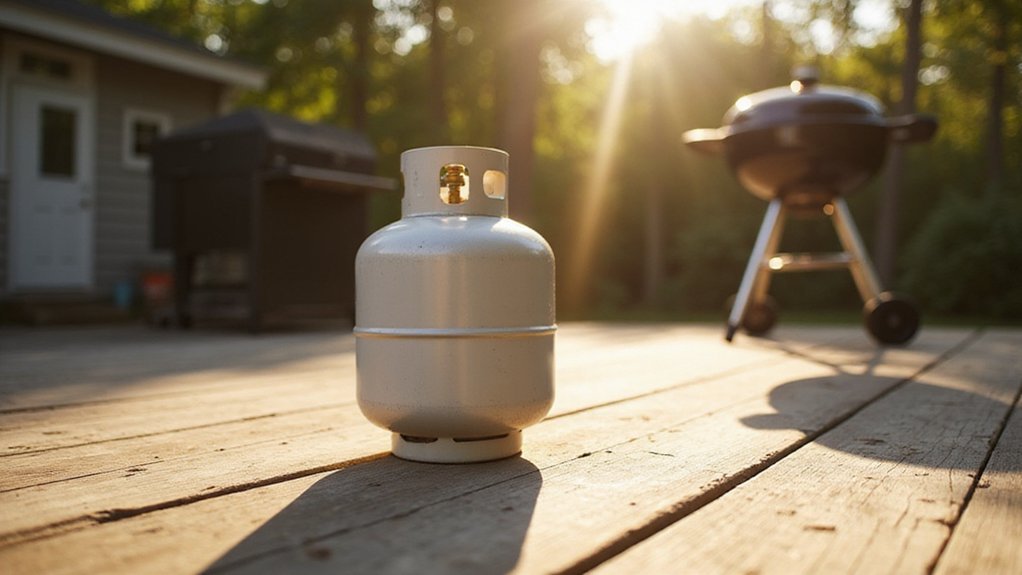
Wondering how long a 20-pound propane tank will last during your grilling or outdoor heating sessions? The answer varies based on what you’re running and how intensively you use it.
For example, a typical 20,000 BTU grill might burn through a tank in about 18 to 20 hours of cooking.
Knowing how to estimate your fuel consumption and monitor your propane level can help you avoid surprises and plan your outdoor activities better.
The rest of this article will walk you through everything you need to know.
The Short Answer: How Long a 20 Lb Tank Typically Lasts
A 20 lb propane tank typically lasts between 6 and 20 hours, depending on your usage. For backyard grilling, a large grill set on high can consume it in 6 to 10 hours, while a medium-sized grill on medium heat may extend to 18 or even 20 hours. Some users find that alternating periods of high and low heat, a practice that mirrors the thermal stress response of deliberate heat exposure, can improve cooking efficiency. If you’re using the tank for a fire pit, expect between 3 and 10 hours of burn time, heavily influenced by flame height and BTU output. Following a detailed DIY propane fire pit guide can help you build a setup that maximizes efficiency and burn time. It’s important to regularly check your tank’s gauge and observe the flame’s color contrast. A proper blue flame with yellow tips indicates efficient combustion, whereas a yellow or irregular flame can signal issues. Always follow manufacturer instructions and local safety regulations when storing or operating your propane tank to prevent accidents, and understand the safe disposal procedures for an empty tank.
How to Calculate Your 20 Lb Tank’s Burn Time
Your appliance’s BTU rating is the key variable, so start by locating that number on the device or its manual. For a 20 lb tank holding about 420,000 total BTUs, your basic burn time formula is to divide 420,000 by the appliance’s BTU per hour rating. Remember that a grill at high flame consumes BTUs much faster than at low. Regular appliance maintenance, such as cleaning burner ports, helps ensure efficient fuel use and more accurate calculations, and these savings concepts also apply to maintaining your swimming pool chemistry, where proper shocking the pool is crucial for addressing algae and contamination. To get a personalized estimate of your remaining burn time, weigh your tank to check the fuel level. Subtract the stamped tare weight from its current weight to determine the actual propane amount in pounds, and use that in your calculation. To find the precise gallons of propane remaining, divide the net weight in pounds by 4.2 pounds per gallon.
Grilling on a 20 Lb Tank: How Many BBQ Sessions?
A 20-pound propane tank can typically fuel about 8 to 10 full BBQ meals on a medium-sized grill, equating to roughly 18 to 20 hours of total grilling time. This estimate depends heavily on factors like your grill’s BTU rating and your cooking style, as demonstrated by an experiment where a Weber Q2000 grill provided 52 cook sessions over 36 hours from one tank lasting about 3.5 months. Using all burners on high heat or opting for larger, more powerful grills can significantly reduce this number to as few as 4 or 5 meals per tank. The cost to refill is a primary variable in your total grilling budget, alongside how long your tank lasts. To maximize your propane usage, focus on conserving fuel by avoiding excessive preheating, using only the burners you need, and maintaining your grill properly. Just as a pool’s pump runtime must be adjusted after chemical treatments, your grill’s fuel efficiency depends on proper operational habits. Regular cleaning of burner ports and other components ensures efficient fuel burning, helping you get the most out of each tank, much like a well-fitted pool cover protects and maximizes the longevity of your pool investment.
Using a 20 Lb Tank for Camping & Patios
A 20-pound propane tank typically lasts 18 to 20 hours when used continuously on a 20,000 BTU appliance. This duration can vary based on your appliance’s efficiency, how often you operate it, and environmental conditions. For camping, this means you can expect the tank to power your RV or heater for about 3 to 7 days during moderate use, including running the furnace. Avoid running the furnace constantly in hot weather to conserve fuel and extend your tank’s life. In cold temperatures, heavy heating may drain a tank in just 1 to 2 days, so carrying multiple tanks ensures you stay warm without interruption. On your patio, a standard 40,000 BTU heater can run approximately 10 to 20 hours on a full 20 lb tank. Always check for leaks, store tanks upright outdoors, and monitor usage to avoid unexpectedly running out of fuel. Proper management helps you plan timely replacements and maintain safety.
What Can Make Your Propane Run Out Faster (Or Slower)?
Several factors can make your propane run out faster or slower. Running high-BTU appliances like heaters or grills for extended periods consumes fuel quickly. Old or poorly maintained equipment burns gas inefficiently, causing you to use more propane. A faulty regulator can over-feed gas, leading to waste and safety hazards, so regular checks are essential. Hidden leaks also silently drain your tank, so inspecting connections and hoses is a good habit. Cold weather reduces vaporization of the propane, forcing your appliances to work harder and increasing fuel consumption. Most critically, using an outdoor-only propane patio heater indoors can lead to a deadly build-up of carbon monoxide and is a severe safety risk.
To slow down your propane use, ensure proper ventilation to improve combustion efficiency. Upgrading to energy-efficient appliances can reduce overall consumption, and choosing the right appliance for your needs is important, just like deciding between a steam shower or sauna for your home wellness goals. Fixing leaks promptly prevents unnecessary loss, while keeping equipment well-maintained optimizes fuel efficiency. Monitoring your tank’s pressure gauge is a useful habit for tracking consumption, similar to how you would monitor a saltwater chlorinator to ensure proper chemical balance in a pool. Simple behavioral changes, like avoiding unnecessary use of appliances or shutting them off when not needed, also help conserve fuel.
How to Check Your 20 Lb Tank’s Fuel Level
To check the fuel level in your 20 lb propane tank, start with a simple water test. Carefully pour hot (not boiling) water down the side of the tank and then feel for a cool line. The cool spot indicates the level of remaining propane, since the liquid absorbs heat differently from the empty space. For a more precise measurement, weigh the tank on a scale and subtract the stamped tare weight, which is usually around 17 pounds. This way, you can determine how much propane is left based on the weight difference.
Some tanks come with a built-in gauge, but keep in mind these are only approximate and may not be entirely accurate. A 20 lb tank on a typical grill often provides 8 to 10 hours of cooking time. Always ensure you are handling the tank safely: keep it outdoors, upright, and away from any ignition sources. When storing the tank, place it in a well-ventilated area and protect the valve when it’s not in use. Regularly checking your tank allows you to plan refills and prevents unexpected runouts during use.
Troubleshooting Short Run Times: Leaks, Gauges, and Appliance Issues
If your 20 lb propane tank empties much sooner than expected, the likely causes are a leak, a faulty gauge or regulator, or an inefficient appliance. Start by checking all connection fittings and hoses for leaks using a soapy water solution; bubbles will indicate a leak that needs fixing. Even a small leak can significantly reduce your tank’s longevity.
Next, examine the pressure regulator. If it’s over five years old or shows signs of frost buildup, it may be failing. A malfunctioning regulator can cause inconsistent gas flow, leading the tank to appear empty prematurely. Opening the tank valve slowly prevents the safety regulator from tripping and causing a sudden drop in gas pressure. Replacing a faulty regulator ensures steady performance and accurate readings.
Finally, evaluate your appliance’s fuel consumption. High-BTU burners or appliances with clogged ports burn through propane faster than normal. Regular cleaning and maintenance help optimize fuel use. Always shut off the gas and seek professional advice if you detect leaks or suspect regulator issues to prevent dangerous situations.
How to Make Your Propane Last Longer: Efficiency Tips
To make your propane last longer, adopting practical habits can significantly extend your supply. Focus on appliance efficiency by covering pots, using lids on grills, and keeping burners clean to improve fuel conversion. Manage your cooking by batch-preparing meals, utilizing residual heat, and reducing pre-heat times to conserve propane. For heating, set your thermostat lower, use zone heating to target specific areas, and insulate living spaces to prevent heat loss. Maximize your water heater by setting it to 120°F and insulating pipes to maintain hot water longer. Sealing drafts around doors and windows helps prevent heat from escaping, effectively reducing propane use for heating. Just like securing an outdoor rug against the wind, you can apply simple, preventative measures to manage your fuel consumption efficiently. Always follow safety guidelines, such as turning off the tank valve when appliances are not in use, to prevent leaks. Properly storing your propane tank in a cool, shaded area can also help maintain its pressure and efficiency. Tracking your propane tank lifespan with regular maintenance ensures you can plan your usage effectively. These strategic actions ensure you get the most out of every pound of propane.