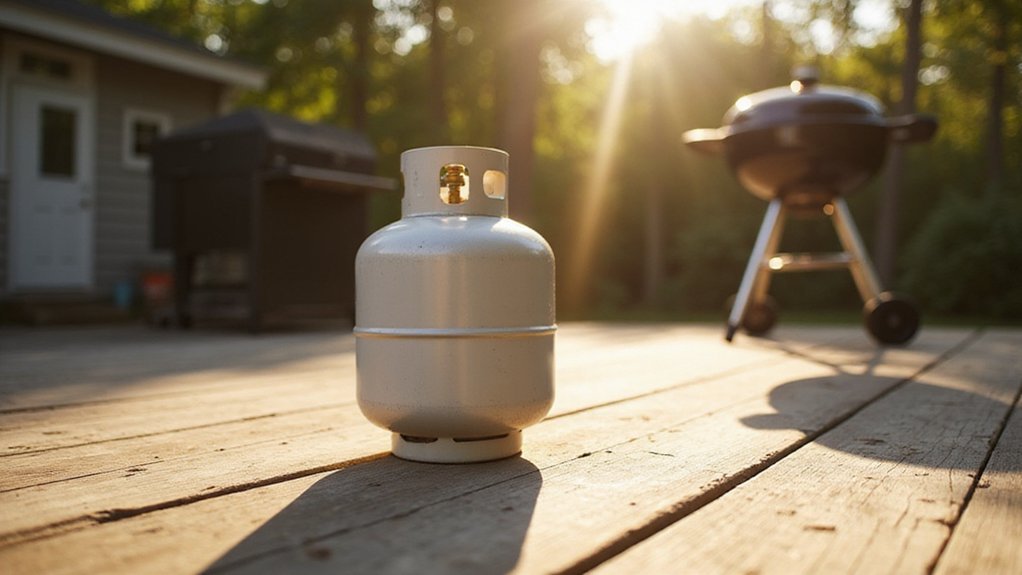
Wondering how to tell if your propane tank is running low? Keeping track of your fuel level is easier than you might think, and there are a few simple ways to do it without special tools.
From quick visual methods to weighing the tank, you can find out how much gas remains and avoid surprises. Read on to learn easy techniques for checking your propane tank level accurately.
How to Check Your Propane Tank Level: 6 Methods
To get an accurate reading of your propane level, weigh the tank and subtract its tare weight. Find the “T.W.” stamp on the tank’s collar to determine the empty weight of the tank. After disconnecting the tank from your appliance or system, place it on a standard scale. Ensure safety by always disconnecting the tank before weighing to prevent accidents. The weight difference between the full tank and its tare weight indicates how much propane remains. You can convert this weight from pounds to gallons using standard conversion charts. This method is highly precise because it measures the actual fuel mass, making it one of the most reliable non-gauge options for assessing your propane level. For a quick estimate without a scale, you can use the hot water test by pouring warm water down the tank’s side and feeling for a temperature change. Creating a DIY patio umbrella base follows a similar principle of ensuring stability by using proper materials and following step-by-step instructions, just like ensuring you have the correct tools and materials before starting a project leads to a smoother installation process. Tracking these precise fuel levels is crucial for maintaining consistent appliance performance, similar to how monitoring infrared sauna sessions can optimize their therapeutic benefits.
Use the Hot Water Method for a Quick Visual Check
You can estimate your propane level quickly using the hot water method. First, ensure your tank is upright, turned off, and cool. Pour a steady, narrow stream of hot water down one side of the tank. Wait a moment for condensation to form. Then, run your hand along the wet area. The metal above the liquid propane will feel warm from the water, while the section in contact with the cool fuel will feel distinctly cold. The sharp division between these zones indicates your approximate fuel level. This visual check provides a rough estimate, most effective for upright steel tanks, and employs the same principles of heat transfer used in other home projects, such as a DIY propane fire pit. For more precision, you can also observe water evaporation, where the warmer empty portion dries quickly leaving a visible line against the cooler wet area filled with propane. A clear transition line is the key indicator, just like observing pool clarity is essential after shocking a green pool to ensure the treatment is working.
Weigh Your Tank for an Exact Propane Reading
Weighing your tank provides an exact, pound-by-pound propane reading. To do this accurately, first locate your tank’s tare weight (TW), which is stamped as “T.W.” on the collar—this tells you its empty weight. Place the tank upright on a bathroom scale and record the total weight. Subtract the TW from this total to find the remaining propane in pounds. Because propane density remains consistent, this weight measurement is highly precise. Ensuring you use the correct tare weight is essential; an inaccurate TW invalidates the reading. For a standard 20-pound tank, a weight near 20 pounds indicates it’s full, while a reading close to zero signals it’s almost empty and in need of refilling. An empty tank weighs about 17 pounds for a standard 20-pound cylinder.
Check Your Tank With Built-In or External Gauges
You can easily check your tank’s propane level with built-in or external gauges, eliminating the need for weighing. For large residential tanks, lift the dome and read the built-in percentage dial, which indicates how much propane remains. Industry guidance suggests scheduling a delivery when the gauge shows between 25 and 30 percent to ensure you don’t run out unexpectedly. Many portable cylinders feature a pressure-based gauge, which provides a quick estimate but is not perfectly precise. External clip-on thermal strips or inline pressure gauges serve as aftermarket options, offering a visual indicator without opening the tank. These thermal strips work by detecting the temperature difference between the liquid propane and the vapor space above it. A durable and popular option is an inline brass gauge like the DOZYANT model, which installs easily between the tank and appliance hose and provides real-time pressure readings. Selecting the right gauge is similar to purchasing pool shock, as both require understanding product types and your specific needs to get the job done effectively. Newer float-type indicators are also available, giving a more accurate liquid-level reading directly. Always ensure your propane tank meets modern safety standards**** by using reliable level monitoring gauges. The choice of gauge depends on your specific propane usage scenario, such as residential heating or portable grilling, all designed to meet modern safety standards that require reliable level monitoring.
Spot a Low Propane Tank With Physical Cues
You can often identify a low propane tank through simple physical cues without checking the gauge. First, feel its weight. A full 20-pound tank feels noticeably heavy, while a nearly empty tank feels surprisingly light. This difference in weight happens because as propane is used, the tank becomes lighter. For long-term planning, understanding the lifespan of materials like a pool liner can help you budget for other household items.
Another helpful method is to check the temperature on the tank’s side. Pour hot water down the metal surface—the part above the liquid propane warms quickly, while the area covering the liquid stays cool. You’ll see a shift line forming where the temperature changes abruptly, indicating the propane level. A tank is never filled to 100% for safety reasons, meaning the cold area will only ever extend partway up the side. The simple tools needed for this test, like a bucket of hot water, are probably already at home.
Additionally, look for visual condensation or a frost line on the cooler metal. The frost appears over the liquid level because the cooled metal pulls moisture from the air, which can give you a rough idea of how much fuel remains.
Finally, observe your appliance’s flames. A low tank often causes the flame to be weak, yellow, or flickering instead of steady and blue—signs that the supply of propane is running low. Always review essential fire pit safety tips before you light or relight your appliance to ensure a safe and enjoyable experience.
Follow These Safety Tips for Every Method
Checking your propane tank’s level involves handling fuel, so safety must come first. Always turn the tank valve completely off before any inspection. Perform checks outdoors, well away from any ignition sources such as flames or sparks. Keep children and pets at a safe distance during the process. Never inspect a tank that is damaged, rusted, or leaking; instead, have it professionally inspected to prevent accidents. You can find safe disposal instructions from reliable sources when a tank is beyond repair.
When using water to estimate the level, pour only hot tap water—never boiling—to avoid burns. Be careful not to pour water near valves or connections, which could cause damage or leaks. For weighing, place the tank on a stable, level surface and use a properly calibrated scale. Know your tank’s tare weight so you can accurately determine the remaining fuel, and understand that a 100 lb tank holds about 24 gallons when full. Following these handling precautions reduces the risk of accidents. If you smell gas or hear a hissing sound, immediately stop what you are doing, evacuate the area, and call for help. These safety rules apply no matter which method you choose to check your propane level, and knowing the real explosion risks helps underscore why these precautions are so critical.